Why Is My White Gold Ring Turning Yellow? The Quality of Your White Gold Matters
If your white gold ring is starting to look yellowish, in particularly around the back of the band, you may be assuming the metal itself is changing colour.
Usually, this is not what is happening.
As all gold when first mined is pure 24ct in a very rich yellow colour, other metals can be added to alloy the metal and also change its colour. White gold is never truly a white colour and often has other tones coming through. This is why all white gold jewellery is finished with a bright white layer of rhodium plating. As that rhodium gradually wears through everyday use, the natural colour of the white gold underneath becomes visible.
But there’s something many people don’t realise:
Not all white gold is the same colour underneath the rhodium.
As a jeweller, I see this first-hand. Almost every week we have rings from other jewellers come into the MDT DESIGN workshop for rhodium plating where the underlying 18ct white gold is surprisingly yellow or even slightly brown in appearance. Often mistaken for a 9ct yellow gold.
With a good-quality white gold alloy, you shouldn’t see the ring suddenly turn noticeably yellow as the rhodium wears off. The underlying metal should be much closer to a greyish-white colour, making the transition considerably less noticeable.
What Is White Gold Actually Made From?
Pure gold is naturally yellow. To produce white gold, pure gold is combined with other metals to create a whiter alloy.
With 18ct white gold, 75% of the alloy is pure gold. The remaining 25% consists of other metals that influence characteristics including its colour and working properties.
This means two rings can both legitimately be stamped 18ct or 750 white gold while having noticeably different colours underneath their rhodium plating.
That’s an important distinction, particularly with an engagement ring that’s going to be worn every day.
Why Is My White Gold Ring Turning Yellow?
White gold jewellery is rhodium plated to produce the crisp, bright white finish people associate with white gold.
Rhodium plating is only a surface coating, so over time with every knock, scratch and bump, it will gradually wear through. But your white gold isn’t necessarily turning yellow.
What you are seeing the actual natural colour of the white gold underneath.
If the underlying alloy is already a good greyish-white colour, the transition will be subtle. If the underlying white gold is naturally a much more yellow or brown colour, the contrast can be very dramatic.
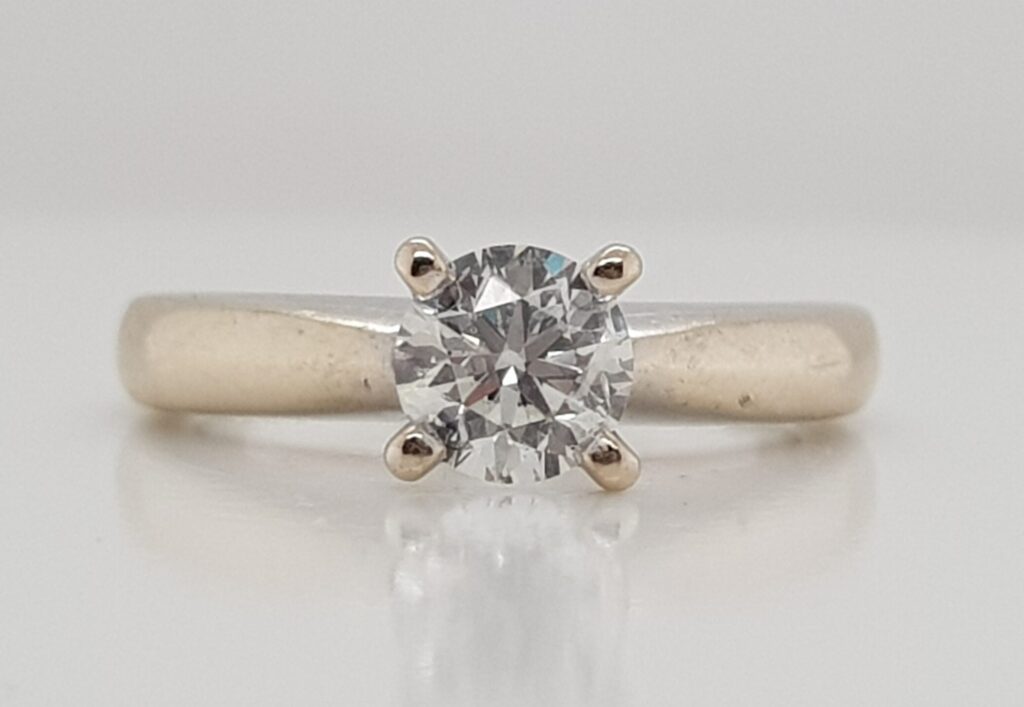
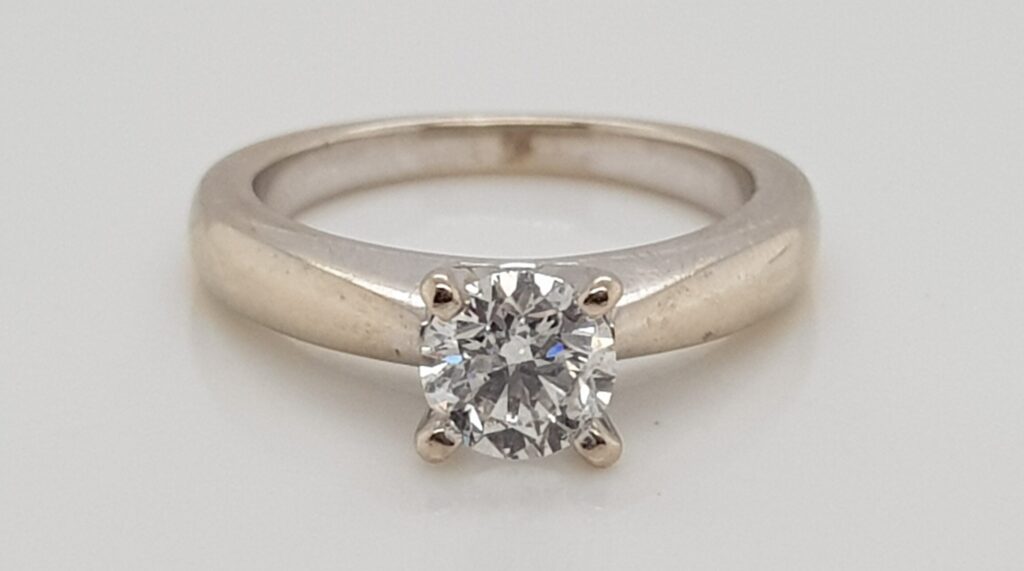
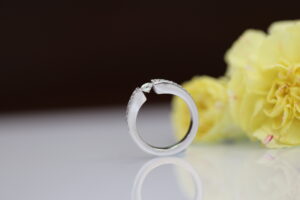
An 18ct white gold engagement ring brought into MDT DESIGN for servicing. As the rhodium plating has worn, the noticeably warmer colour of the underlying white gold has become visible.
Kosta’s Expert Jeweller Tip
When buying a white gold ring, ask your jeweller about the actual white gold alloy they use. Two brand-new rhodium-plated rings may look almost identical in a store, but the difference can become very obvious once the rhodium plating starts to wear through.
Should Good-Quality White Gold Turn Yellow?
No it shouldn’t, this is where the quality and alloying of the white gold alloy really matter.
In my opinion, a good-quality 18ct white gold should never show a strong yellow colour when its rhodium plating wears off.
The rhodium will still wear – this is completely normal – but underneath it I would expect to see a much more subtle greyish-white metal.
This is very important because the closer the underlying white gold is to the whiter colour of the rhodium plating, the less noticeable the transition becomes as the plating starts to wear.
A more yellowish underlying alloy creates much bigger contrast. Even something as small as a scrape or dint is a relatively small area can wear the rhodium off and therefore make the ring look like it urgently needs replating.
Why MDT DESIGN Uses Palladium-Based 18ct White Gold
At MDT DESIGN, we use a high-quality palladium-based 18ct white gold.
Before rhodium plating, our white gold has more of a greyish-white appearance, rather than the noticeably yellow or brown colour we sometimes see when rings from elsewhere come into our workshop.
We still rhodium plate all of our white gold jewellery as rhodium provides that beautiful, bright white finish, something that natural white gold cannot be.
The difference becomes noticeable as the plating wears.
As our white gold is already relatively white, you don’t generally see the same dramatic change from bright white to yellow. Instead, the rhodium gradually reveals a greyish-white metal underneath, making the wear considerably less noticeable.
This doesn’t mean the rhodium won’t eventually need replating. All rhodium plating does wear off over time.
It simply means the difference between the plated and un-plated worn areas is much less noticeable.
Does Yellow White Gold Mean It Isn’t 18ct Gold?
No.
A yellowish appearance underneath the rhodium doesn’t necessarily mean a ring isn’t genuine 18ct white gold.
18ct white gold contains 75% pure gold, with the remaining 25% made up of other metals. The particular alloy used will influence the natural colour of the finished white gold.
That’s why the 18ct or 750 stamp alone doesn’t tell you the entire story when it comes to white gold and what the colour of the underlying alloy will be.
For an engagement or wedding ring that are expected to be worn for decades, I believe the quality and natural colour of that underlying metal are worth considering.
How Often Should White Gold Be Rhodium Plated?
There isn’t one correct timeframe.
Some people wear through rhodium plating much faster than others. How often you wear your ring, your lifestyle and the amount of friction the ring receives will all affect how quickly the plating wears.
At MDT DESIGN, we have on-site jewellers in our Melbourne boutique and workshop allowing us to complete repairs, servicing, resizing and remodelling of pieces no matter if they are originally purchased from us. This allows us to regularly see rings where relatively small amounts of rhodium wear have become very noticeable because of the contrast with the yellowish white gold underneath.
The wearer may feel the ring needs rhodium plating urgently, not necessarily because substantially more rhodium has worn away, but because the colour difference from white to yellow is much easier to notice.
With a higher quality of white gold, the naturally greyer-white alloy transition is far less obvious.
Kosta’s Expert Jeweller Tip
Of course jewellers may give you a guide, but don’t judge whether your white gold ring needs rhodium plating by a fixed timeframe. Look at the ring itself for wear. When you begin noticing a difference in colour, have your jeweller inspect, clean, polish and rhodium plate it as required.
What Should You Ask When Buying a White Gold Ring?
Most people understandably focus on the diamond details, type of design and price when choosing an engagement ring.
But if you’re choosing white gold, there’s another question I’d recommend you ask:
“What type of 18ct white gold alloy do you use?”
You can even ask what the white gold looks like naturally before it is rhodium plated.
A finished ring in a jewellery cabinet may be a lovely bright and white tone, but this may be because you’re looking at the rhodium coating. What matters in the years ahead is also the quality and natural colour of the metal underneath it.
Frequently Asked Questions About White Gold
Why is my white gold ring turning yellow?
Usually, the white gold itself isn’t suddenly changing colour. The rhodium plating is wearing away and exposing the natural colour of the white gold alloy underneath. If that underlying alloy is quite yellow, the change can be particularly noticeable.
Should good-quality white gold look yellow underneath rhodium plating?
A high-quality white gold alloy can have a much whiter underlying appearance. At MDT DESIGN, our palladium-based 18ct white gold has more of a greyish-white colour, so when the rhodium wears, the colour difference is much less noticeable.
Is all 18ct white gold the same colour?
No. All genuine 18ct white gold contains 75% pure gold, but the composition of the remaining 25% alloys can be different. This affects the natural colour and other characteristics of the finished metal.
Does palladium-based white gold still need rhodium plating?
Yes. At MDT DESIGN, we rhodium plate our palladium-based white gold to achieve a brighter and whiter finish than the natural colour provides. The advantage is that the underlying metal is already a greyish-white colour, so the difference is less dramatic as the rhodium wears.
How often should I rhodium plate my white gold ring?
There is no universal timeframe, but we generally advise every 8 to 12 months. It depends on how frequently the ring is worn, the wearer’s lifestyle and how quickly the rhodium coating wears. Have your ring inspected when you begin noticing changes in its colour or finish.
The Quality of Your White Gold Matters
When buying a white gold engagement ring, don’t only consider how white it looks when it’s brand new.
Ask what’s underneath the rhodium.
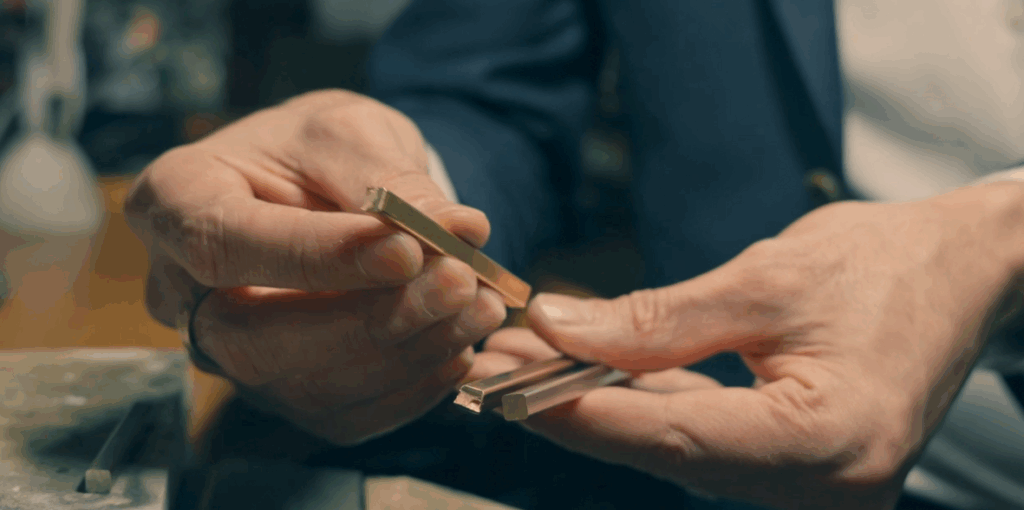
After more than 20 years at the jeweller’s bench, I’ve seen just how different white gold alloys can look before rhodium plating starts to wear off and how they differ when undergoing repairs and maintenance.
At MDT DESIGN, we use a hi quality palladium-based 18ct white gold because its natural colour is much closer to a greyish white rather than a yellow. We do still rhodium plate it for a brighter whiter finish, but as that plating eventually wears off, the colour change is far less noticeable.
Learn More About Precious Metals
Explore our guides to White Gold, Yellow Gold, Rose Gold, and Platinum to understand the differences between each precious metal and find the right choice for your jewellery. MDT DESIGN
Still Have Questions?
Our team is here to help. Contact MDT DESIGN to speak with one of our jewellery experts about precious metals, jewellery care or your next piece.