Mokume Gane vs Two-Tone Wedding Rings: What’s the Difference?
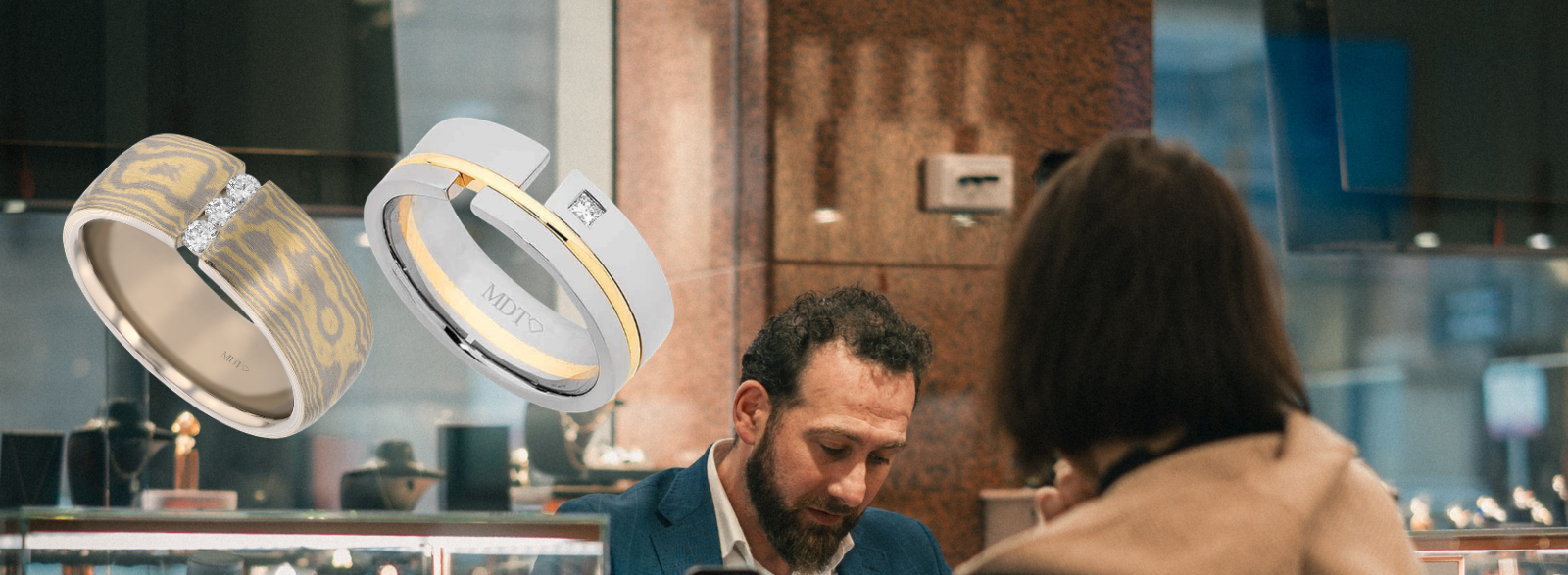
Several wedding rings can be comprised of the same colours of gold and still appear entirely different.
One ring may be clean, with seperate contrasting bands of yellow and white gold, while another houses an intricate pattern resembling woodgrain.
The distinction lies in how the metal is worked and how they are specifically combined.
Mokume Gane and traditional two-tone wedding rings both fuze different metal colours into one uniform design, however their aesthetic, processes of manufacture and design possibilities are very different.
At MDT DESIGN Melbourne jewellers, we begab handmaking Mokume Gane Jewellery in 1998.
Master jeweller, diamond grader and director Kosta Theochari, explains what sets these styles apart, why Mokume Gane requires such specialised craftsmanship, and what to consider when selecting a ring you’ll wear every day.

Mokume Gane vs Two-Tone Wedding Rings: Summarised
Mokume Gane vs Two-Tone Wedding Rings
Two distinct approaches to wedding ring design. Discover the differences at a glance.
| Feature | Mokume Gane | Conventional Two-Tone |
|---|---|---|
| Appearance | Intricate, flowing, woodgrain-like patterns. | Defined sections of contrasting metal colours. |
| Manufacturing | Different metals are layered, fused, forged and patterned. | Contrasting metal components are individually made and assembled. |
| Pattern | Every handmade pattern is unique. | Design elements can be reproduced more consistently. |
| Colour Contrast | Often subtle, with intricate details visible up close. | Usually more immediately noticeable. |
| Cost | Generally higher due to specialised labour and preparation. | Often less labour-intensive, depending on design. |
| Durability | Comparable to other properly made rings of similar gold composition. | Comparable when made with similar materials and workmanship. |
| Resizing | Possible, but enlargements require careful consideration of the pattern. | Depends on the construction and placement of contrasting metals. |
| Best Suited To | Those who appreciate subtle individuality and traditional craftsmanship. | Those who prefer defined colour contrast and structured designs. |
Both styles can be entirely handmade. Durability and resizing options depend on the individual ring design and materials.
Neither style is automatically better. The right choice depends on the appearance you prefer, your budget and the details that matter most to you.
What is a Mokume Gane Wedding Ring?
Mokume Gane is a traditional Japanese technique used to create flowing, layered patterns of metal that resemble a natural woodgrain pattern. The name ‘Mokume Gane’ is commonly translated as wood-grain metal.
Rather than placing different coloured metals beside one another, the Mokume Gane process involves fusing multiple layers of metal and working them in a particular way- to reveal intricate patterns throughout the material.
The technique originated in Japan and was historically associated with a special decorative metalwork used for things like sword fittings.
Today, Mokume Gane offers a unique approach to contemporary wedding ring design.
At MDT DESIGN, our Mokume Gane rings are handmade using combinations of 18ct white gold with either 18ct yellow gold or 18ct rose gold.
Through traditional rolling, forging, filing and shaping, these different gold colours become part of an individual pattern.
Why Does Mokume Gane Look Like Woodgrain?
The characteristic design develops as the layers of bonded precious metal are worked and shaped.
As the jeweller works the metal, each different layer becomes visible at the surface, creating one of a kind, unique flowing lines, swirls and designs.
When the metal is formed into a rounded ring, these layers often resemble the natural grain of wood.
Resulting in a a pattern that is one with the metal itself, rather than a engraving or printed decoration that lives on the rings surface.
Browse our large collection of Mokume Gane Rings
Can Two Mokume Gane Rings Ever Be Identical?
No two Mokume Gane rings handmade by MDT DESIGN will have exactly the same pattern.
Our jewellers can influence certain characteristics of the metal itself, like how tight or open the pattern appears to flow. However, each individual variation created during manufacturing means that every finished ring is entierly unique.
As Kosta explains, the patterns are much like fingerprints, one of a kind.
For couples wanting matching wedding rings, this creates an interesting possibility: two rings can share the same gold combination, width and overall style while retaining their own individual patterns- or sometimes couples wish for their ring to be made from the same sheet of Mokume Gane- meaning that they belong together without being identical.
Read Customising Your Mokume Gane Ring: Tips and Ideas for more information about the Mokume Gane custom design process.
What Is a Conventional Two-Tone Wedding Ring?
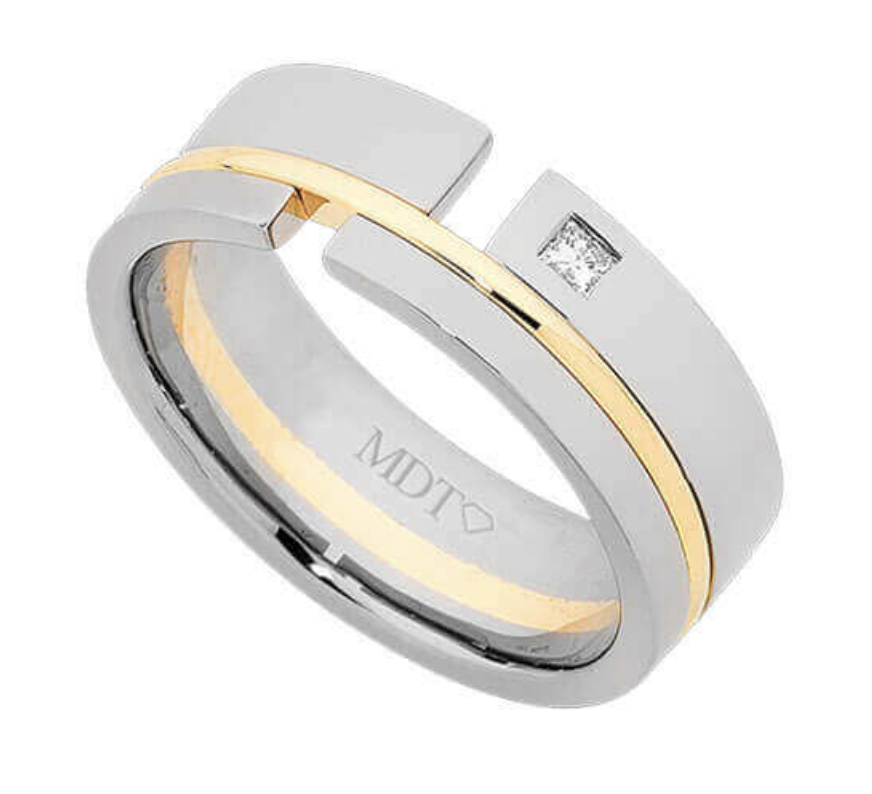
A regular two-tone wedding ring combines two contrasting precious metal colours within a single design.
E.g: A ring might feature a white gold band with yellow gold details, or a rose gold centre with white gold tracks.
How this differs to Mokume Gane? When it comes to a two tone wedding ring, different colours are generally arranged into two (or more) design components rather than fused into one flush, intricate layered pattern.
This method allows for clean divisions between metals, defined borders and contrasting grooves.
The contrast of colour is normally more recognisable in two tone wedding rings, even from a distance.
For an example, explore our Riveted Two-Tone Diamond Band C204, which uses contrasting metal components as part of its design.
To see other styles of this method; browse our large collection of two-tone wedding rings, individually handmade in our Melbourne workshop.
Can a Two-Tone Ring Still Be Handmade?
Absolutely.
Two-tone describes the use of contrasting metal colours, not whether a ring is handmade or mass-produced.
A conventional two-tone wedding ring can be entirely handmade using traditional jewellery-making techniques.
At MDT DESIGN, both our conventional two-tone rings and Mokume Gane rings are made by hand in our on-site workshop.
The distinction is the way the different metals are incorporated into the design.

How Are Mokume Gane Wedding Rings Made?
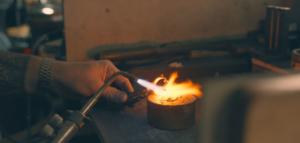
Creating a Mokume Gane ring requires a lot more preparation and intricacy than making a conventional wedding band.
Before the jeweller can begin forming the ring, the patterned Mokume Gane metal itself must first be created.
Fusing and Layering of the Gold
The process starts with carefully prepared fine sheets of different coloured 18ct gold.
These are stacked and bonded under controlled heat and pressure to create a solid layered piece of metal, known as a billet.
Achieving a reliable bond requires an understanding of how the different gold alloys behave under heat.
If any of these meticulous conditions are not correct, the layers may fail to fuse properly or lose colour distinction needed to create this woodgrain pattern.
Developing the Pattern and Forging the Ring
Once bonded, the metal is rolled, beaten, forged, filed and shaped to reveal the different layers.
This is the stage where the jeweller starts to develop the individual Mokume Gane pattern.
The amount of manipulation and how the metal is manipulated affects how each individual pattern appears, from condensed intricate lines to wider, open areas of contrasting.
Only after this extensive preparation can the patterned material be formed into the intended ring design.
For a closer look at the manufacturing process, read Kosta’s article, The Making of a Mokume Gane Ring.
Why Does Experience Matter?
Mokume Gane requires more than an understanding of conventional ring manufacturing.
The jeweller must know how to bond the metals, develop the pattern and work the finished material without compromising its structure or appearance.
MDT DESIGN has been creating Mokume Gane jewellery since 1998, refining these techniques through decades of practical experience.
Every piece is individually handmade in our Collins Street workshop, where the pattern, proportions and finishing can be tailored to the design.
Why Are Mokume Gane Rings More Expensive?
Mokume Gane wedding rings generally cost more than comparatively simple conventional two-tone bands because of the additional preparation, specialised labour and skill involved.
As Kosta explains, with a conventional gold wedding band, the jeweller can often begin working directly from a prepared bar of precious metal.
With Mokume Gane, the jeweller must first create the patterned material before making the ring.
What Contributes to the Cost?
Specialised metal preparation: Different coloured golds must be carefully prepared, layered and fused.
Additional manufacturing time: The bonded material undergoes extensive forging, rolling, filing and shaping to develop the pattern.
Technical expertise: Creating reliable bonds and controlled patterns requires experience with the behaviour of different precious metal alloys.
Additional material requirements: The process begins with more metal than may ultimately appear in the finished ring, allowing the jeweller to develop and refine the pattern.
Metal recovery costs: Filing and shaping produces mixed-gold filings. Because the different alloys cannot simply be separated for direct reuse, the material must be recovered through refining, with associated costs.
These factors contribute to the price of a Mokume Gane ring.
The additional cost reflects the work involved in creating the patterned material, not an assumption that the finished ring will automatically be more durable than another well-made gold ring.
Is Mokume Gane More Durable Than a Two-Tone Wedding Ring?
Not inherently.
One of the most important considerations when comparing these rings is understanding that Mokume Gane’s specialised manufacturing process does not automatically make it stronger or longer-lasting than a conventional 18ct gold wedding ring.
According to Kosta, an 18ct Mokume Gane ring made by MDT DESIGN should generally wear and last similarly to a properly made conventional 18ct gold ring.
Durability on your specific ring often depends on factors like the alloys used, the quality of manufacture, the proportions of the ring and how it is worn and maintained.
Why Does MDT DESIGN Use Only 18ct Gold in Its Mokume Gane?
MDT DESIGN creates its Mokume Gane designs using combinations of 18ct gold- we do not incorporate silver or lower-carat gold alloys.
There are many reasons behind this choice.
Firstly, 18ct yellow and rose gold offer rich, distinctive colours that help the pattern become visible against white gold.
Secondly, using carefully selected 18ct gold alloys allows our jewellers to work with material combinations they know and understand through years of manufacturing experience.
Kosta generally advises against incorporating silver into the Mokume Gane wedding rings MDT DESIGN produces, particularly where long-term daily wear is a priority.
Silver is softer than many commonly used jewellery gold alloys, and mixing metals with significantly different working characteristics can introduce additional manufacturing and wear considerations.
Poor bonding can also create a risk of delamination, where bonded metal layers begin to separate.
This does not mean every Mokume Gane ring containing silver or lower-carat gold is poorly made. It reflects MDT DESIGN’s preferred approach to creating 18ct gold Mokume Gane wedding rings intended for long-term wear.
Which Looks Better: Mokume Gane or Two-Tone Gold?
This comes down to the type of contrast you prefer.
Kosta often recommends Mokume Gane to customers who appreciate the shape of a traditional wedding band but want something more individual.
From a distance, a Mokume Gane ring can appear relatively understated. It’s often only when someone looks more closely that the intricate pattern becomes apparent.
A conventional two-tone ring tends to create a more obvious visual distinction between its different metal colours.
Choose Mokume Gane If You Prefer Subtle Individuality
Mokume Gane may be the better choice if you:
- Appreciate traditional wedding band shapes with an unexpected detail.
- Prefer intricate patterns over bold colour divisions.
- Value individually handmade craftsmanship.
- Want a ring with a pattern that cannot be reproduced exactly.
- Like the idea of complementary wedding rings that are similar but not identical.
Explore our handmade Mokume Gane wedding rings for examples of different profiles, widths and gold combinations.
Choose a Conventional Two-Tone Ring If You Prefer Defined Contrast
A conventional two-tone wedding ring may be more suitable if you:
- Want the different gold colours to be immediately noticeable.
- Prefer clean lines, borders or structured design details.
- Like the contrast of yellow, rose or white gold in clearly defined sections.
- Want greater freedom to position contrasting metal components within a particular design.
- Prefer a simpler manufacturing approach without the additional Mokume Gane patterning process.
Both styles can be customised to reflect your personal preferences.
Does Ring Width Affect the Mokume Gane Pattern?
Yes. Width is particularly important when designing a Mokume Gane wedding ring.
Because the pattern is made up of intricate layers, a very narrow band may not provide enough visible surface area to appreciate the detail.
Wider bands generally allow the pattern to become more open, distinct and noticeable.
At MDT DESIGN, Kosta generally recommends a minimum width of approximately 3mm for Mokume Gane rings.
This provides a useful starting point, although the ideal width depends on the design, profile and the effect you want to achieve.
A conventional two-tone ring can also be influenced by its width, but its defined sections of contrasting colour may remain more readily visible in narrower designs.
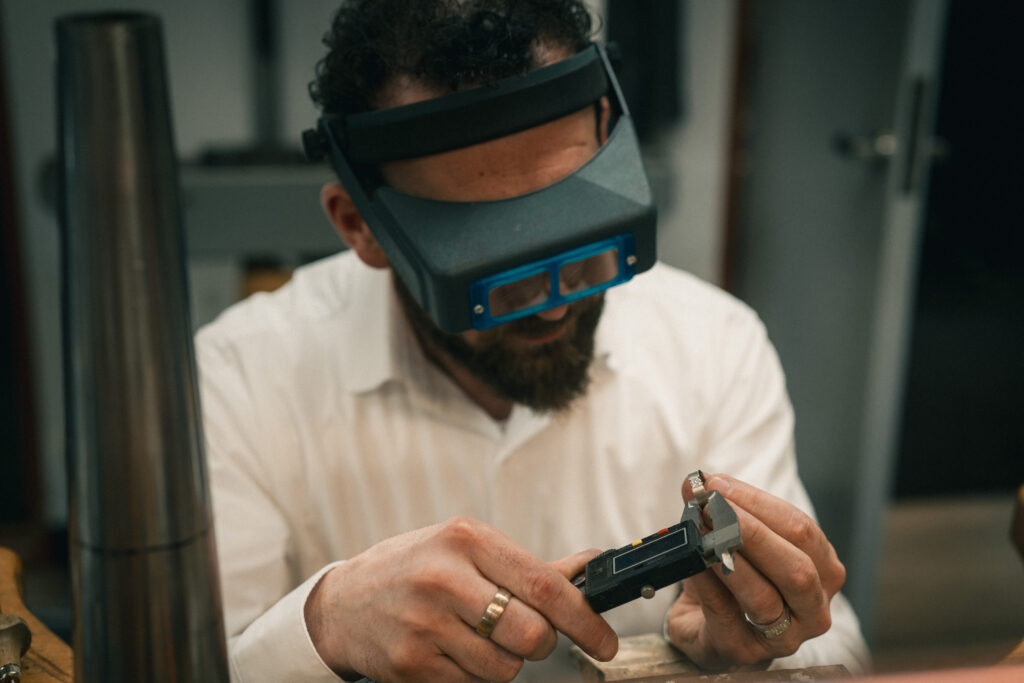
Are There Design Limitations With Mokume Gane?
Yes, and they’re worth discussing before commissioning a ring.
While the pattern can be influenced during manufacturing, it cannot be controlled with the same precision as a conventional decorative groove or separately constructed metal component.
Some designs also use Mokume Gane as an outer layer over another metal structure. Depending on the construction, solder joins may be visible from the side.
An experienced jeweller can explain these considerations and help determine which design elements will produce the best result.
How Do You Maintain a Mokume Gane Wedding Ring?
Mokume Gane wedding rings made from 18ct gold generally require the same everyday care as other 18ct gold jewellery.
However, the surface finish plays an important role in how clearly the pattern appears.
Why Does MDT DESIGN Recommend a Matte Finish?
MDT DESIGN typically finishes its Mokume Gane rings with an emery matte surface.
This tremendously reduces the bright reflection thrown by a highly polished finish, in turn allowing the contrasting gold colours and detailed pattern to appear more visible.
Whilst a polished surface can reflect a lot of light, resulting in the subtle colour differences in the pattern become less obvious.
Will the Pattern Fade Over Time?
The Mokume Gane pattern is created through the layered metal itself, so it is not simply a decorative coating that wears away.
However, the matte surface finish will gradually become smoother and shinier through everyday wear.
This can make the pattern appear less distinct until the finish is refreshed.
Kosta recommends restoring the emery matte finish approximately every eight months to a year, depending on how the ring is worn.
This maintenance is part of MDT DESIGN’s lifetime complimentary jewellery servicing.
Can You Clean Mokume Gane Like an Ordinary Gold Ring?
Generally, yes.
For MDT DESIGN’s 18ct gold Mokume Gane rings, ordinary gentle jewellery cleaning is appropriate.
Avoid unnecessary abrasive polishing at home, particularly if you want to preserve the matte appearance.
Professional servicing is the best opportunity to have the ring inspected and its original finish restored.
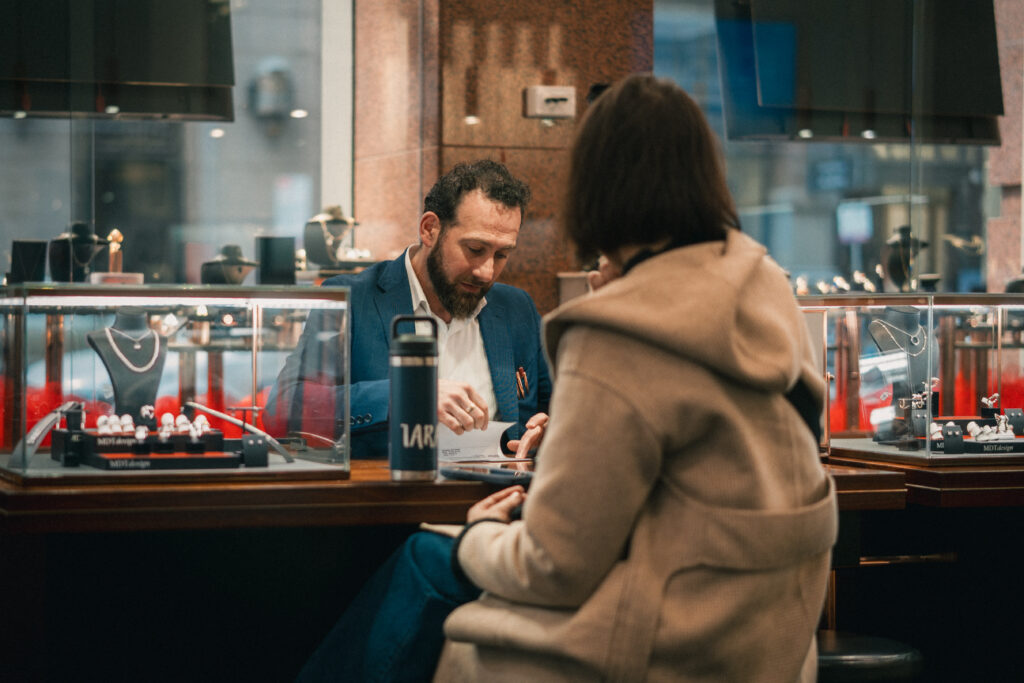
Can Mokume Gane Wedding Rings Be Resized?
Yes, although the direction and extent of the resize can affect how the finished ring looks.
Making a Mokume Gane Ring Smaller
According to Kosta, reducing the size of a Mokume Gane ring is generally straightforward, subject to the individual design.
The jeweller can assess the ring and determine how best to adjust it while preserving the appearance of the pattern.
Making a Mokume Gane Ring Larger
Increasing the size can be more complicated because additional metal may need to be inserted.
Although it is possible to add another piece of Mokume Gane, its pattern will not match the existing ring exactly.
In a small section, this can create an untidy or interrupted appearance.
For this reason, Kosta often prefers inserting a carefully selected piece of solid-colour gold, allowing the join to become an intentional design feature rather than attempting to disguise a mismatched pattern.
This is an important consideration when purchasing a Mokume Gane wedding ring, particularly if future resizing may be necessary.
MDT DESIGN’s jewellers can assess the design and explain the available options before any work begins.
Can You Have Matching Mokume Gane Wedding Rings?
Yes!
Matching Mokume Gane wedding rings are very appealing because metal can complement one another without being entierly identical.
A couple might choose the same design elements to feature, for example: gold colour combination. Band width, ring finish and overall pattern style.
The particular patterns will still differ because of the handmade process.
Or in some cases, one partner might prefer Mokume Gane and the other chooses a conventional two-tone band featuring the same gold colours.
What matters most is choosing designs that feel meaningful to the individual people wearing them and there is no prerequisite to what constitutes a matching ring.
Why Choose MDT DESIGN for a Mokume Gane Wedding Ring?
MDT DESIGN is a family-owned Melbourne jeweller established in 1981, with a boutique and on-site workshop at 348 Collins Street.
We’ve specialised in making Mokume Gane jewellery since 1998, combining traditional Japanese-inspired metalworking techniques with our commitment to entirely handmade jewellery.
Our approach includes:
Specialised Mokume Gane experience: Decades of practical knowledge in layering, fusing, forging and patterning different 18ct gold colours.
Entirely handmade manufacturing: Every ring is made in our Melbourne workshop without casting or mass production.
18ct gold combinations: We create our Mokume Gane rings with carefully selected white gold with yellow or rose gold.
Custom design freedom: Widths, profiles, gold combinations and additional design details can be tailored to suit your preferences.
Ongoing care: Our lifetime complimentary servicing helps maintain the appearance and condition of your jewellery.
Whether you prefer the distinct woodgrain style of a Mokume Gane wedding ring, the defined contrasting metal aesthetic of a two-tone wedding ring, or if you are not quite sure what exactly you want yet- our designers and jewellers can assist you in exploring all of the possibilities.
Learn more about our custom jewellery design process or browse our complete wedding ring collection.
Frequently Asked Questions About Mokume Gane and Two-Tone Wedding Rings
Is Mokume Gane the Same as Two-Tone Gold?
No. Both can feature contrasting gold colours, but Mokume Gane involves layering, bonding and working the metals to create an intricate pattern. Conventional two-tone jewellery generally features more clearly defined sections of different metal colours.
Is Mokume Gane More Expensive Than a Two-Tone Wedding Ring?
Generally, Mokume Gane costs more than a comparatively simple two-tone design because the patterned metal must be manufactured before the ring can be formed. The additional labour, material preparation and specialised expertise contribute to the cost.
Is Mokume Gane Stronger Than Regular Gold?
Not necessarily. Kosta advises that MDT DESIGN’s 18ct gold Mokume Gane rings generally wear similarly to other well-made 18ct gold rings. The quality of manufacturing, alloy selection and ring design remain important.
What Is the Best Metal for a Mokume Gane Wedding Ring?
There is no single best combination for every jeweller or design. MDT DESIGN specialises in Mokume Gane made from 18ct white gold combined with 18ct yellow or rose gold, selected for their appearance and the team’s extensive manufacturing experience.
Can Mokume Gane Rings Be Resized?
Yes. Making a ring smaller is generally more straightforward. However it is important to take each Mokume Gane design approach individual to the design at hand. Often in order to make your ring larger- exra metal is reqired. Once we see what design we are working with and know if it is needing to be smaller or larger- and how many specific sizes it needs to change, we will make this decision with our client, educating them on each option availiable to them.
Do Mokume Gane Patterns Wear Off?
This design is not a surface coating, it is formed by the layered metals. The matte finish that helps accentuate the pattern will change with everyday wear and will need servicing, however your mokumegane metal itself will not wear away.
How Wide Should a Mokume Gane Wedding Ring Be?
MDT DESIGN generally suggest a minimum width of approximately 3mm so the pattern has enough room to shine. Wider rings provide the opportunity to display more open and visible patterning.
Can Two Mokume Gane Wedding Rings Match?
Yes the aesthetic of your Mokume Gane rings can match . They can be made with the same gold combination, profile, width and overall pattern character. The metal used can also come from the same sheet as one another- though, the individual patterns will never be exactly identical.
Discover Your Wedding Ring at MDT DESIGN
A wedding ring is one of the few pieces of jewellery you may wear every day for a lifetime. Understanding how it is made is just as important as choosing how it looks.
Mokume Gane offers subtle individuality through intricate, layered patterns and specialised traditional craftsmanship. Conventional two-tone rings offer distinctive colour contrast and a different range of design possibilities.
Both can be beautifully handmade. The right choice is the one that feels right for you.
Explore our Mokume Gane rings and two-tone wedding rings, or contact MDT DESIGN to arrange a consultation with our Melbourne jewellers.
Handmade in Melbourne since 1981.