How to Choose Natural Diamond Stud Earrings: A Master Jeweller’s Guide
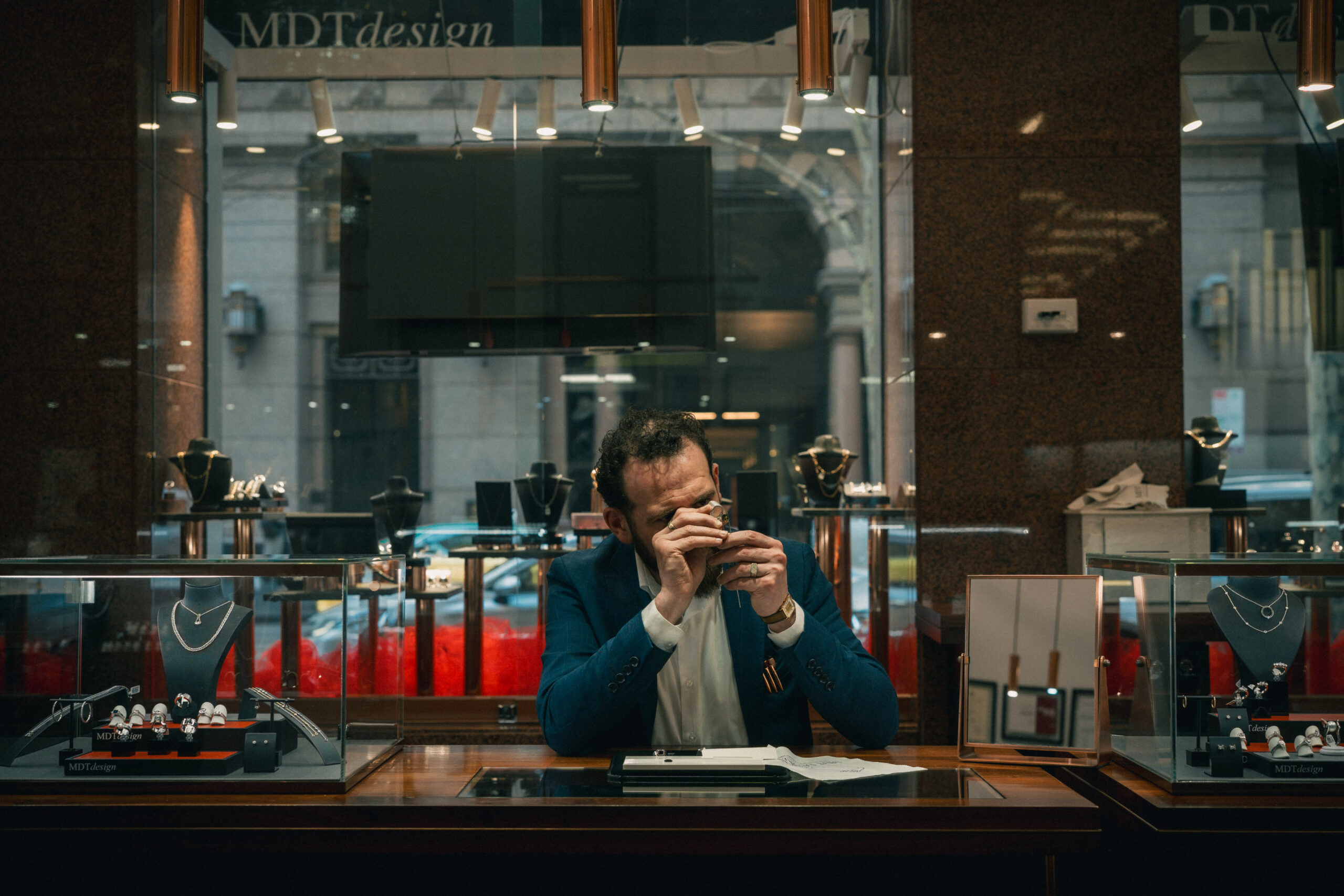
Expert advice from Kosta Theochari, Managing Director, Jeweller and Diamond Grader at MDT DESIGN Melbourne.
A stunning set of natural diamond stud earrings should really achieve more than simply sparkle. The diamonds themselves should speak to one another, the settings should suit the ears of the wearer, and it is very important for the backings to be secure enough to keep them comfortably (and safely) in place.
Yet when selecting the perfect diamond stud earrings for you, some of the most important details are often the easiest to overlook.
At MDT DESIGN, our Melbourne jewellers and designers have been handmaking and designing high quality custom handmade jewellery since 1981.
We asked our director, master jeweller and diamond grader Kosta Theochari what he looks for when selecting natural diamond stud earrings, including the finer details that can make the difference between a nice pair and an incredible one.
From diamond proportions to choosing the right setting and backings, here is what matters most when buying diamond studs.
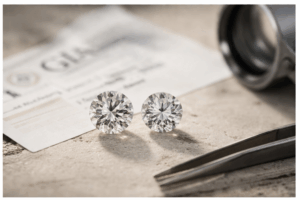
1. Choose Diamonds That Look Like a Pair, Not Just Two Diamonds of the Same Weight
When selecting natural diamonds for stud earrings, matching carat weights is simply a starting point. As may more factors come into play.
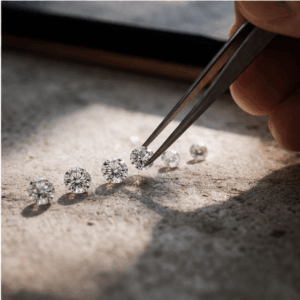
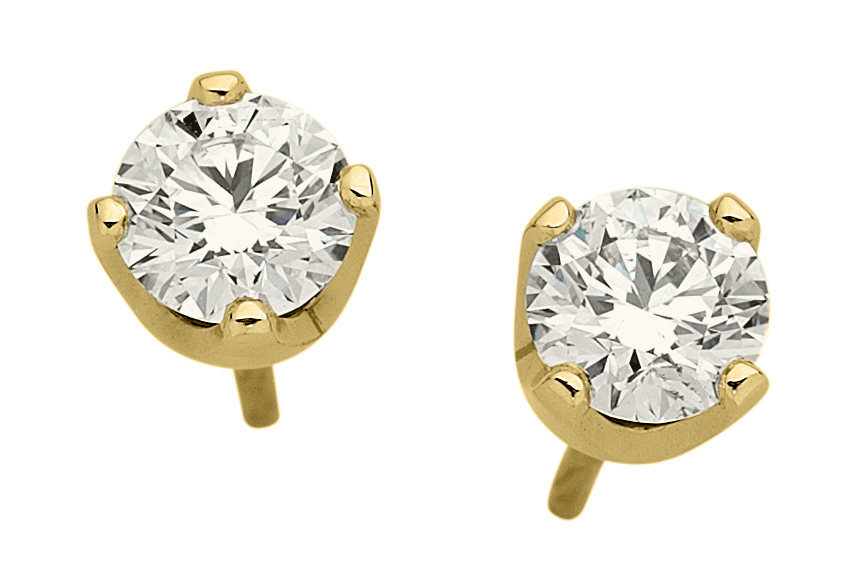
Whilst two diamonds can both weigh 0.50 carats, they can posses noticeably different dimensions. One may appear wider, while another carries more of its weight in its depth. It is important to remember that carat measurement is a weight, meaning that the way your particular stone is cut- will determine its physical size appearance.
According to Kosta, the physical size and cut proportions of the diamonds are among the most important characteristics to match.
The diamonds’ table sizes should also be closely matched. Differences in the proportion of each table can affect how they reflect light, often making one diamond appear differently from its counterpart.
Does Diamond Colour and Clarity Need to Match Perfectly?
Not always.
According to Kosta, a difference a in single colour grade, such as F versus G, is usually quite difficult to notice with the naked eye when diamonds are worn as earrings.
Similarly, diamonds with different clarity grades can appear virtually identical to the naked eye, provided these stones have been assessed by a human (not only a certification) and are both are genuinely eye-clean.
At MDT DESIGN, every diamond we select is individually assessed against our strict quality standards and all our diamonds are eye clean. When working with SI clarity diamonds, we carefully examine each stone to ensure it is eye-clean, rather than relying on only its grading certificate.
This human factor allows us to recommend a world of diamonds that offer excellent visual quality and value.
2. What Diamond Quality Offers the Best Value for Stud Earrings?
Natural diamond stud earrings don’t always require the highest colour and clarity grades to look beautiful on the ear.
For many clients, Kosta recommends considering F–G colour diamonds with carefully selected SI clarity, given that the diamonds themselves are eye-clean and meet MDT DESIGN’s quality standards.
The reason? Kosta shares that these grades can offer beautiful white-looking diamonds, without the premium price often associated with D and E colour diamonds.
However it is important to remember that clarity grades alone don’t guarantee an eye-clean appearance. Each diamond should be assessed individually.
Should You Choose Larger Diamonds or Higher Quality?
Generally, Kosta favours quality over size, but the right balance depends on the budget and what aesthetic you are looking for.
As an example, with a budget of approximately $1,000–$3,000, Kosta might suggest prioritising a larger diamond size and selecting slightly lower colour or clarity grades, provided the diamonds remain visually appealing and well matched.
While for budgets sitting above the $3,000 mark, he will often recommends placing greater emphasis on the colour grading of the diamond.
His general advice is (where you can) avoid sacrificing the appearance or quality of the diamonds to achieve a larger carat weight.
3. What Is the Best Diamond Stud Earring Size for Everyday Wear?
One of the most common questions when choosing diamond stud earrings is ‘how large they should be?’
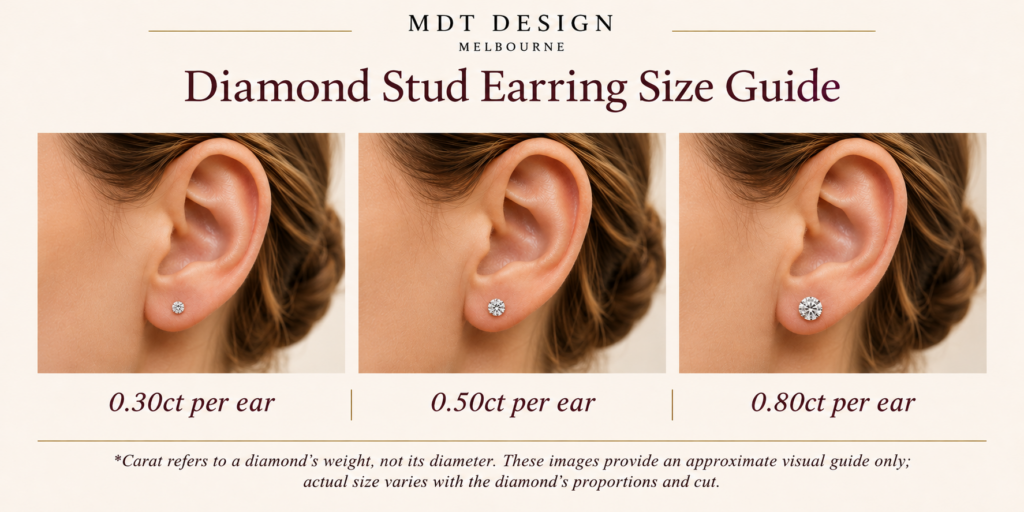
While he will always take your personal preferences into account, as a general rule Kosta considers 0.50 carats per ear, or 1.00 carat total weight, a great starting point for everyday earrings, provided that sits within your price expectations.
However, as each person is entirely different, the ideal size often depends on the wearer’s earlobes, proportions and preferred appearance. Every one has different tastes and different ears.
Diamond Stud Size Guide
| Per Ear | Total Pair Weight | Kosta’s Guidance |
|---|---|---|
| 0.30ct | 0.60ct total | A delicate option for smaller earlobes. |
| 0.40ct | 0.80ct total | A balanced, slightly smaller everyday option. |
| 0.50ct | 1.00ct total | A versatile everyday starting point for many wearers. |
| 0.80ct | 1.60ct total | A more substantial look for larger earlobes or frames. |
| 1.00ct | 2.00ct total | A prominent size that some may find large for daily wear. |
General guidance only. Diamond dimensions, settings and individual earlobe proportions influence the final appearance.
Why Earlobe Size Matters
As earlobes are not uniform, one size, a diamond that looks like it is perfectly proportioned on one person may appear oversized or undersized on another.
Larger diamonds also usually require settings that project further from the earlobe. This can naturally make them more likely to catch on hair or clothing, particularly with claw settings earrings.
When selecting the perfect diamond stud earrings for you, trying on different sizes is one of the most effective ways to find a pair that looks balanced and feels comfortable.
4. Claw vs Bezel Settings: Which Is Best for Diamond Stud Earrings?
The settings purpose is not simply to hold a diamond in place. It also influences how large the diamond appears, the way its shape appears and how it sits against the ear of the wearer.
Kosta highlights several important differences between common diamond stud settings.
Six-Claw Diamond Stud Earrings
Kosta generally prefers six-claw settings for round brilliant cut diamonds.
The six claws help maintain and emphasise the diamond’s roundness and can make it appear slightly larger than some alternative claw arrangements.
Another advantage is visual harmony. If the earring rotates while being worn, the diamond retains its rounded appearance and remains symmetrical between both ears.
Explore our White Gold Six-Claw Diamond Stud Earrings.
Four-Claw Diamond Stud Earrings
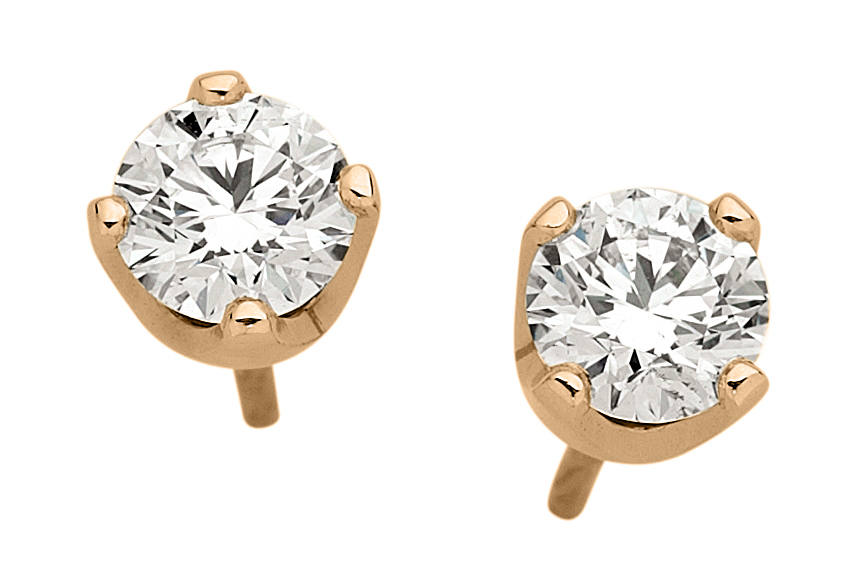
Four-claw settings provide a clean, classic appearance with fewer visible claws.
However, Kosta notes that this particular arrangement makes a round diamond appear slightly more squared.
If the earring rotates, the orientation of the claws can also change its appearance, which for some matters.
Explore our Four-Claw Set Diamond Earrings.
Three-Claw Diamond Stud Earrings
Three-claw settings offer another distinctive design aesthetic, but their triangular arrangement can influence how a round diamond’s shape is perceived also.
For clients wanting a round appearance, Kosta suggests sticking with six claws.
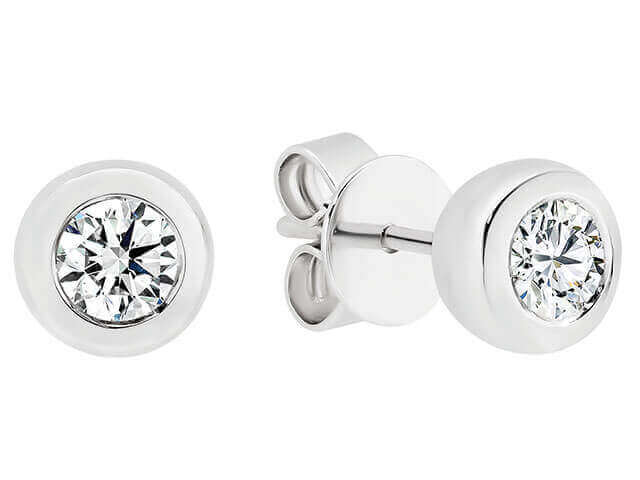
Bezel-Set Diamond Stud Earrings
A bezel setting is a setting that surrounds the diamond with a continuous rim of metal.
Kosta suggests that bezel settings are quite appealing for their ability to make a diamond look larger, as the surrounding metal contributes to its overall visual presence on the ear.
Bezel settings also provide a smooth, modern appearance that is especially appealing for everyday wear.
Explore our Bezel-Set Diamond Stud Earrings in Yellow Gold.
At a Glance: Diamond Stud Earring Settings
| Setting | Visual Appearance | Kosta’s Observation |
|---|---|---|
| Six-Claw | Rounded, classic appearance | Preferred for round diamonds, including when the earring rotates. |
| Four-Claw | Clean, slightly angular appearance | Can make a round diamond appear squarer. |
| Three-Claw | Distinctive triangular arrangement | Can influence the perceived shape of a round diamond. |
| Bezel | Smooth metal surround | Can increase the diamond’s apparent size. |
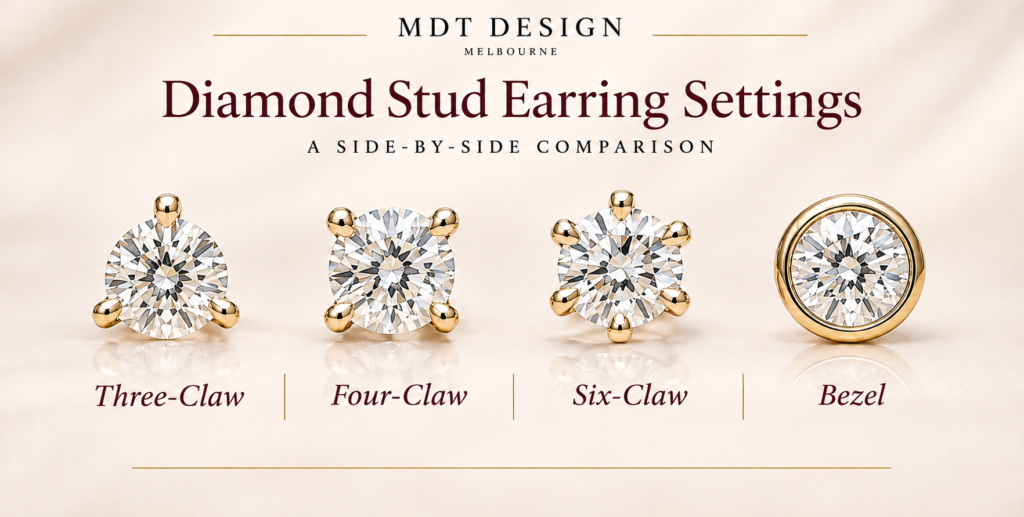
The best setting ultimately depends on the diamond, the desired aesthetic and how the earrings will be worn.
5. Don’t Overlook the Earring Backings
The diamond may be the most valuable part of the earring, but the backing is what helps keep the most valuable part secure.
Kosta believes clients should pay a lot of attention to this detail. However sometimes it is overlooked- as it is a detail that is not visible when worn.
For valuable diamond studs, he recommends secure, solid, well-crafted butterfly backings rather than thin, flimsy ones.
A quality backing should grip the post securely without feeling excessively difficult to remove.
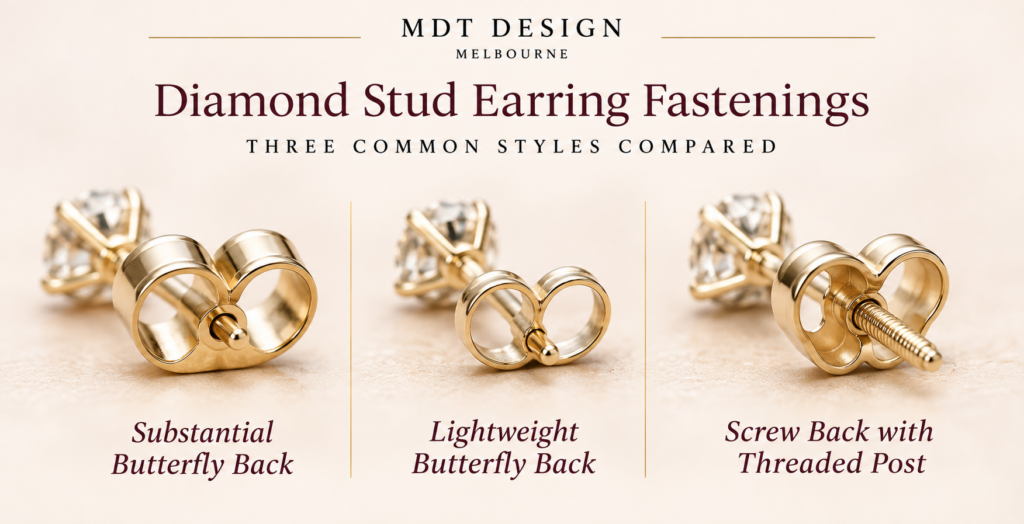
Are Screw-Back Diamond Earrings More Secure?
Yes, Screw-back earring posts and backings can provide an additional level of security.
They can sometimes take longer to put on and to remove, which can reduce the likelihood of an earring being accidentally falling off.
However it is important to note that no fastening system is entierly maintenance-free.
How Often Should Diamond Earring Backings Be Checked?
Kosta recommends having diamond studs inspected around once a year, however, if you notice it is loose or sitting in an odd fashion, it is important to take that as a note to remove them and take them in to a jeweller you trust to asses and adust them.
As they are worn, over time, butterfly backings can loosen, and the notch on an earring post might require servicing.
These are among the most common issues he encounters when servicing diamond earrings.
Regular professional cleaning is also worthwhile, as accumulated oils and debris can really affect the appearance of your diamond and contribute to irritation around the piercing.
6. What Makes a Well-Made Pair of Diamond Stud Earrings?
Two pairs of diamond studs might look identical to you, however the way they are made can often be vastly different.
Kosta suggests to look for solid metalwork, securely made settings and backings of a high quality.
He also recommends to consider how the earrings sit on the ear of the wearer, how well the diamonds are matched and if the design is practical for daily wear.
These details aren’t always obvious when viewing a product photograph or diamond certificate or carat-weight description.
At MDT DESIGN, our jewellery is individually handmade in our Melbourne workshop, allowing the attention necessary to the construction and finishing details of each design, that can influence how a piece looks, feels and wears over time.
Learn more about MDT DESIGN’s family history and handmade jewellery philosophy.
7. What Should You Compare When Buying Natural Diamond Stud Earrings?
When comparing two pairs of diamond studs that sit at significantly different price points, we urge you to look beyond simply the total carat weight.
Consider:
- Diamond matching: Do both diamonds appear similar in diameter and proportions?
- Colour and clarity: Are you paying for noticeable differences that can be detected when the earrings are worn?
- Setting design: Does the setting work well with the diamonds and suit your aesthetic and lifestyle needs?
- Backing quality: Are the posts and fastenings well made and secure?
- Everyday comfort: Do the earrings sit well on your particular earlobes?
- Construction: Are the earrings setting and all components made to a high quality standard?
For Kosta, the ideal pair combines natural diamonds that are well matched, with a thoughtful design and solid, reliable construction.
The result should be a pair of earrings that looks beautiful together, feels comfortable, looks proportionate and can be worn and loved for years to come.
Frequently Asked Questions About Diamond Stud Earrings
Is 1 carat too big for diamond stud earrings?
No. A pair of earrings that weigh 1.00 carat in total (0.50 carats per ear) is a great everyday size for many. However, when talking about a 1.00-carat diamond in each ear – this can create a much more substantial difference and often depends on the setting itself and the aesthetic preferences of the wearer as a stone of this size often sits much higher on the ear.
Is F or G colour good for diamond stud earrings?
Certainly. Master jeweller Kosta usually recommends an F–G colour natural diamond for earrings because they offer a bright white appearance without the higher cost associated with a D or E coloured stone.
What is the best setting for round diamond studs?
Generally the six-claw setting is best for round diamonds because they maintain and accentuate the round shape of the diamond and remain symmetrical when worn, even if the earrings rotate. Bezel settings are another excellent option for those seeking a smooth symmetrical metal appearing earring.
Are butterfly backs safe for expensive diamond earrings?
High-quality butterfly backings can be suitable for valuable diamond studs, given that they fit securely and are regularly inspected. Screw-back fastenings are another option for those wanting additional security, but we do also recommend them being inspected routinely.
Should diamond stud earrings be exactly the same carat weight?
It is more important that the visual dimensions and proportions are matching, as achieving identical carat weights does not always result in two diamonds with the same size appearance. As the term ‘carat’ refers to the weight of a stone, two diamonds of the same weight may have different diameters or appearances.
Discover Handmade Natural Diamond Stud Earrings at MDT DESIGN
A pair of natural diamond studs that is well matched, is about more than simply selecting two stones.
It’s about focusing on selecting diamonds that work well together, complimenting one another, selecting settings that suit the wearer and ensuring the entire earring (including the backing) is made with quality in mind.
MDT DESIGN is a family-owned Melbourne jeweller specialising in individually handmade custom jewellery.
Visit our boutique on Collins St in the heart of Melbourne, for a consultation with one of our diamond and design experts- to explore natural diamond stud earrings and discuss the size, setting and design that suits you best.
Explore Our Diamond Stud Earrings Collection
Enquire About Custom Diamond Earrings
Expert insights provided by Kosta Theochari, Managing Director, Jeweller and Diamond Grader at MDT DESIGN Melbourne.