Handmade Engagement Rings vs Handcrafted Engagement Rings – What’s the Difference (and Why It Matters)?
If you’ve ever shopped for an engagement ring, you’ve likely seen the terms “handmade” and “handcrafted” used interchangeably. Many jewellery brands use these words to create the impression of artisan quality – but in reality, these words often refer to two very different methods of creation.
And when it comes to jewellery that’s worn daily – particularly engagement rings – how the ring is made directly affects strength, durability, longevity, and overall quality.
This guide breaks down the difference between handmade engagement rings and handcrafted engagement rings, so you can make a confident and informed decision based on quality and craftsmanship – not marketing.
Key Takeaways
- Handmade engagement rings are created the traditional way – starting from a solid bar of precious metal and built at the jeweller’s bench from start to finish.
- Handcrafted engagement rings are often designed digitally and cast into shape, then polished or finished by hand.
- The key difference is what the ring begins as – and how much of it is truly built by a jeweller, rather than poured into a mould.
- Handmade rings are generally stronger and more durable because the metal is forged, compressed, and work-hardened throughout the process.
What Is a Handmade Engagement Ring?
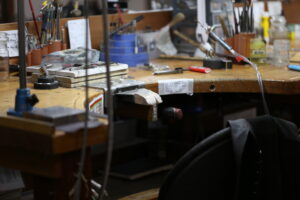
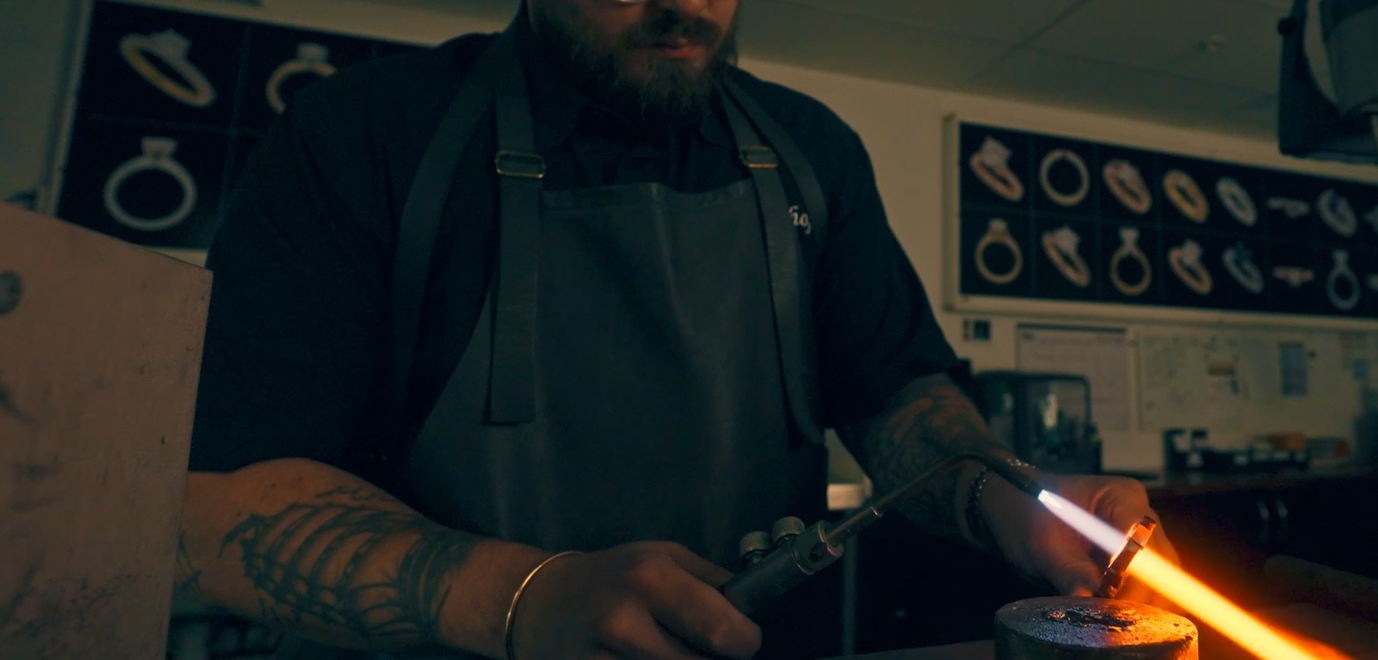
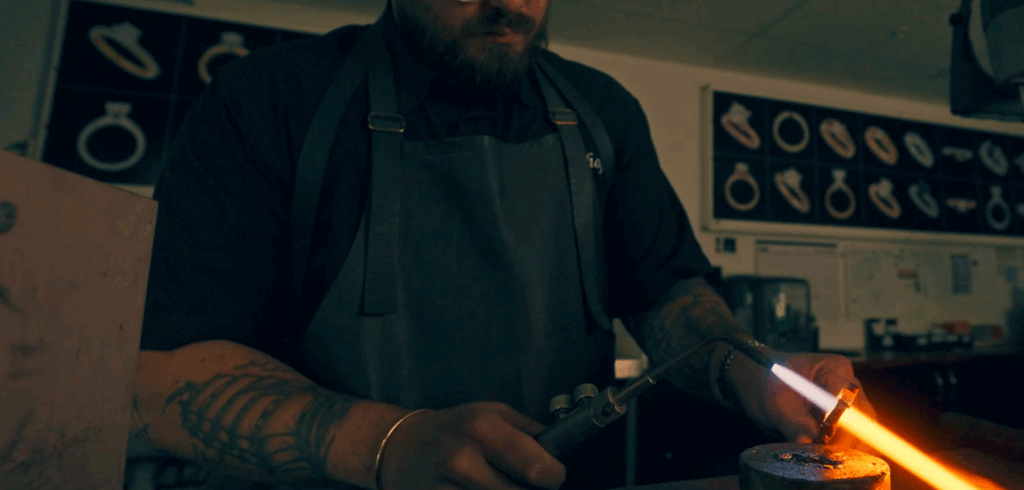
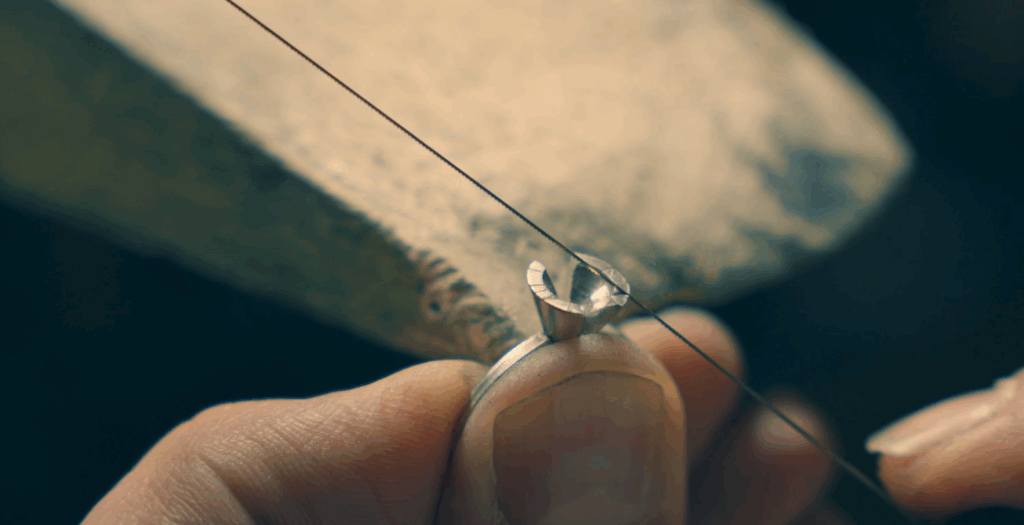
A handmade engagement ring is made the traditional way – where the jeweller forms each part of the ring by hand using bench tools, rolling mills, heat, precision shaping, and decades of experience.
In a true handmade process, the ring doesn’t begin as a CAD (computer aided design) image, pre-made mould or a 3D print. Instead, it begins as solid precious metal – typically a bar of gold or platinum.
From that solid bar, the jeweller shapes and constructs every element of the engagement ring design.
How Handmade Rings Are Made
A handmade ring is created through steps like:
- Forging and rolling the metal
- Forming and bending the band
- Soldering and joining components
- Hammering and compressing the structure
- Work-hardening the metal throughout the process
- Building the setting and claws by hand
- Finishing, polishing, and refining by eye
Every detail is physically shaped and adjusted by a human – meaning the jeweller controls strength, symmetry, and fit at every stage.
Why Handmade Rings Are Stronger
When metal is forged and worked at the bench, it becomes denser and more compact. This creates a ring that is structurally superior – particularly important for:
- claws
- high-set stones
- delicate designs
- rings worn every single day
- heirloom pieces
This is why traditional handmade rings are often described as heirloom-grade – built with structural integrity to last generations, not just years.
What Is a Handcrafted Engagement Ring?
The term handcrafted is often used for rings that involve hand finishing – but the ring itself is usually cast.
Most handcrafted engagement rings begin with CAD (Computer Aided Design). The design is created digitally, then 3D printed or made into a wax model, and finally cast by pouring molten metal into a mould.
How Handcrafted Rings Are Often Made
In a typical handcrafted process:
- The ring is designed in CAD
- A wax model is printed
- A mould is created from the wax model
- Molten metal is poured into the mould
- The ring is then polished and finished by hand
The finishing still requires less skill – the core structure of the ring is created by casting, not solidified or hardened piece by piece at the bench.
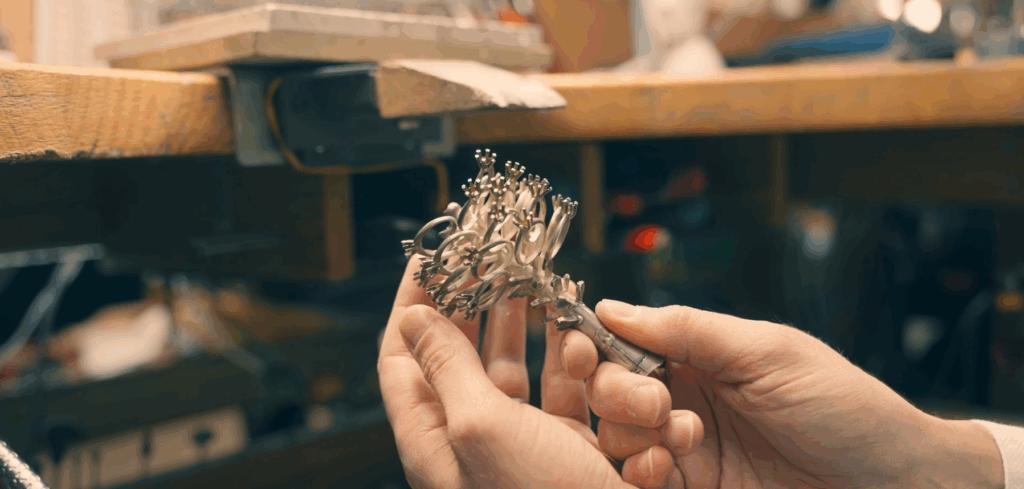
pictured above: A casting tree is a cluster of wax ring models attached to a central wax stem. It’s used in the casting process to create multiple rings or components at once. Once the tree is encased in plaster and the wax is melted away, molten precious metal is poured into the mould, forming the ring shapes. The metal tree is then cut apart, and each ring is finished and polished by hand.
The Limitation of Casting
Casting is an efficient method that cuts the time it takes to make a ring drastically and can create beautiful appearing jewellery, but it lacks the work-hardening process that traditional bench-making provides.
Cast metal can also contain:
- porosity
- less structural integrity
- softer more flimsy result
- thinner sections to reduce production cost
- less ability to refine proportions through the making process
This doesn’t mean cast rings are “bad.” It means they are not constructed in the same way or with the same quality– and the difference becomes important when you’re choosing something meant to last forever.
Handmade vs Handcrafted – The Comparison (Easy Read)
1. How the ring begins
- Handmade: begins as a solid bar of metal
- Handcrafted: begins as a digital design and cast mould
2. How strength is created
- Handmade: strength comes from forging, compressing, and work-hardening
- Handcrafted: strength relies on the cast structure, which can be softer
3. How claws and settings are made
- Handmade: claws and settings are shaped individually by the jeweller
- Handcrafted: settings are usually cast as part of the ring
4. Uniqueness
- Handmade: each ring is one-of-a-kind, even when inspired by a similar design
- Handcrafted: designs can be reproduced repeatedly with identical casts
5. Durability
- Handmade: typically the most durable option, particularly for daily wear
- Handcrafted: usually not as robust or durable as handmade
6. Tools involved
- Handmade: bench tools, rolling mills, torches, hand forming, traditional techniques
- Handcrafted: CAD software, 3D printing, casting equipment, plus hand finishing
Why This Matters for Engagement Rings (Especially in Melbourne)
An engagement ring isn’t jewellery you wear occasionally. It becomes part of your daily life – worn while:
- driving
- working
- cooking
- travelling
- washing hands
- moving furniture
- lifting groceries
- living in the real world
So your ring needs to be more than beautiful. It needs to be engineered.
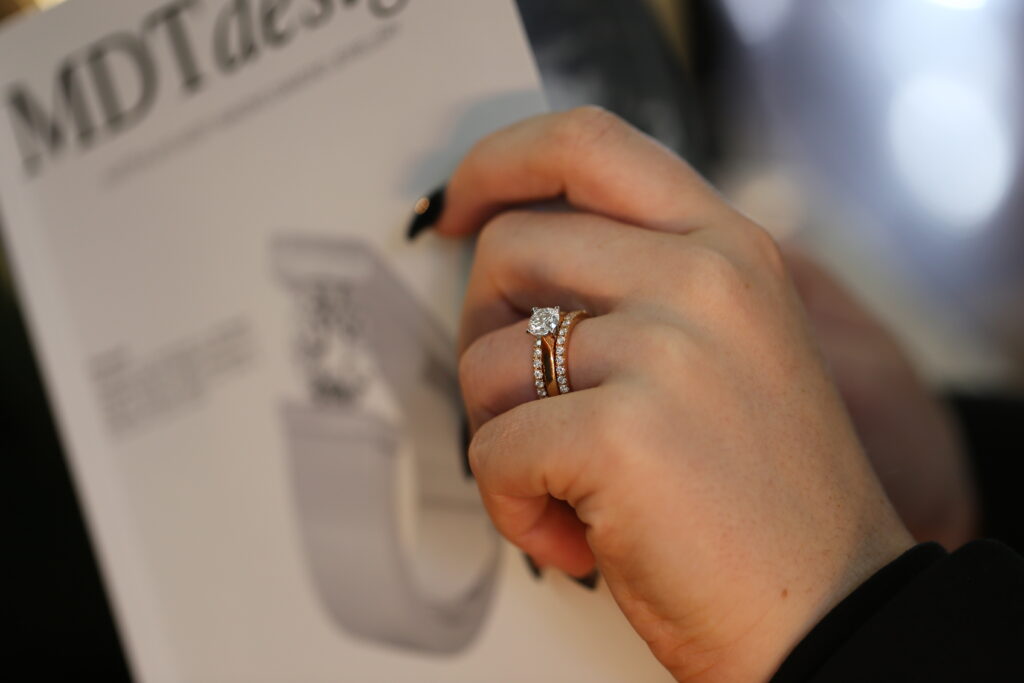
A ring can look identical in photos, but perform completely differently in real life.
That’s because durability isn’t only about physical design – it’s about how the metal is built and how the stone is secured.
Traditional handmade construction is one of the best ways to ensure your ring has:
- long-term structural integrity
- secure settings
- the ability to be maintained for life
- true heirloom durability
Why MDT DESIGN Only Creates Truly Handmade Rings
At MDT DESIGN, every ring is entirely handmade using traditional bench-making methods.
That means:
- Every part of your ring begins as a solid bar of precious metal
- Every component is forged and shaped by hand
- Nothing is mass produced
- Nothing is outsourced
- We do not use CAD
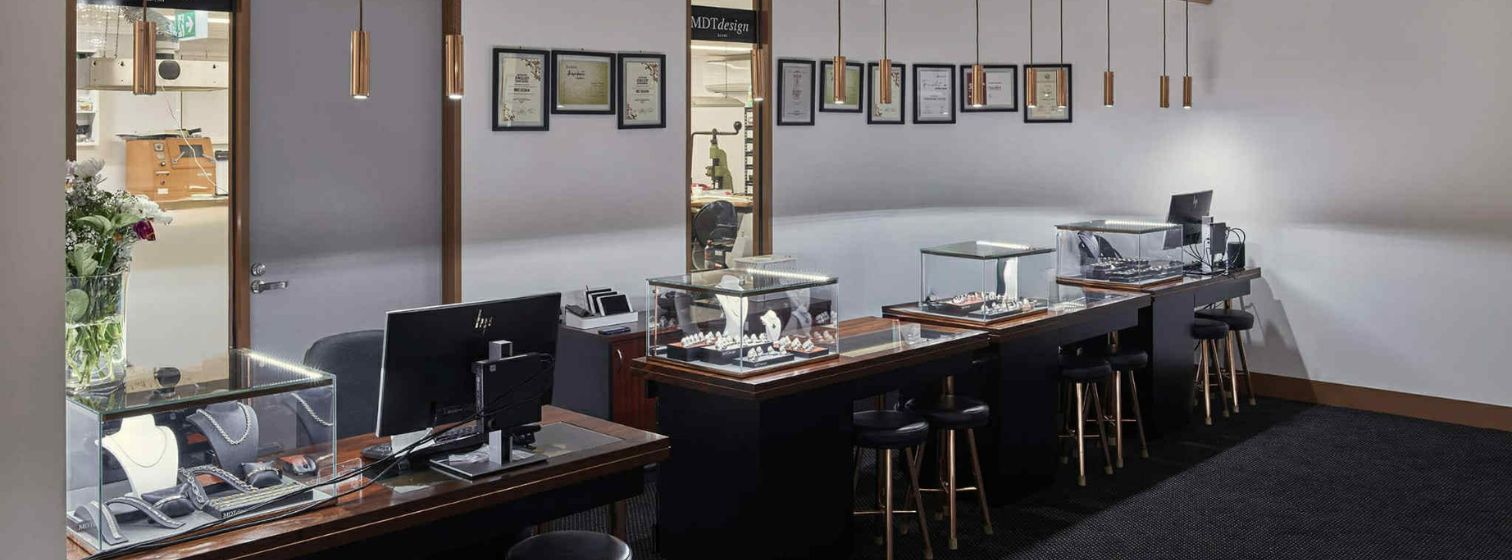
- Every ring is built in our Collins Street Jewellery workshop in Melbourne CBD
This method has been refined through decades of craftsmanship – and it’s why handmade rings remain the gold standard in durability and quality.
Final Thoughts
“Handmade” and “handcrafted” may sound similar, but they represent two completely different foundations.
If you want an engagement ring designed to last generations, the traditional handmade method offers:
- stronger metal structure
- more precision through craftsmanship
- superior durability for everyday wear
- a ring that is truly built to become an heirloom
Because when you’re choosing a ring that symbolises forever, it makes sense to choose one made the same way – with time, skill, and integrity.
If you’re exploring a handmade engagement ring in Melbourne, we welcome you to visit our Collins Street boutique to experience the difference in craftsmanship firsthand.
You can also contact our team to discuss a custom design consultation, stone sourcing, and traditional handmade ring creation.