The Vintage Jewels of 20th-Century America’s Elite
Inside the Jewellery Collections of Happy Rockefeller, Peggy Rockefeller and Barbara Sinatra
Vintage jewellery presents a rare glance into the cultural history of design. Beyond their remarkable beauty, historic pieces reveal how societies viewed wealth, craftsmanship, and of course personal expression.
Some of the most fascinating collections in jewellery history do not belong to museums, but to individuals – women whose personal taste helped define the visual language of luxury in their era.
Figures such as Happy Rockefeller, Peggy Rockefeller and Barbara Sinatra assembled extraordinary jewellery collections during the mid-20th century. Their awe-inspiring jewellery was often sourced from the world’s most respected design houses, including Van Cleef & Arpels, Cartier and Harry Winston.
When viewed together, these collections reveal far more than personal style, they are a sign of the time that they derived from. These collections tell a broader story about post-war optimism, Hollywood glamour, European craftsmanship and the emergence of America as a global centre of luxury consumption.
For jewellers today, these historic pieces remain important references – not only for their design but also for their remarkable craftsmanship.
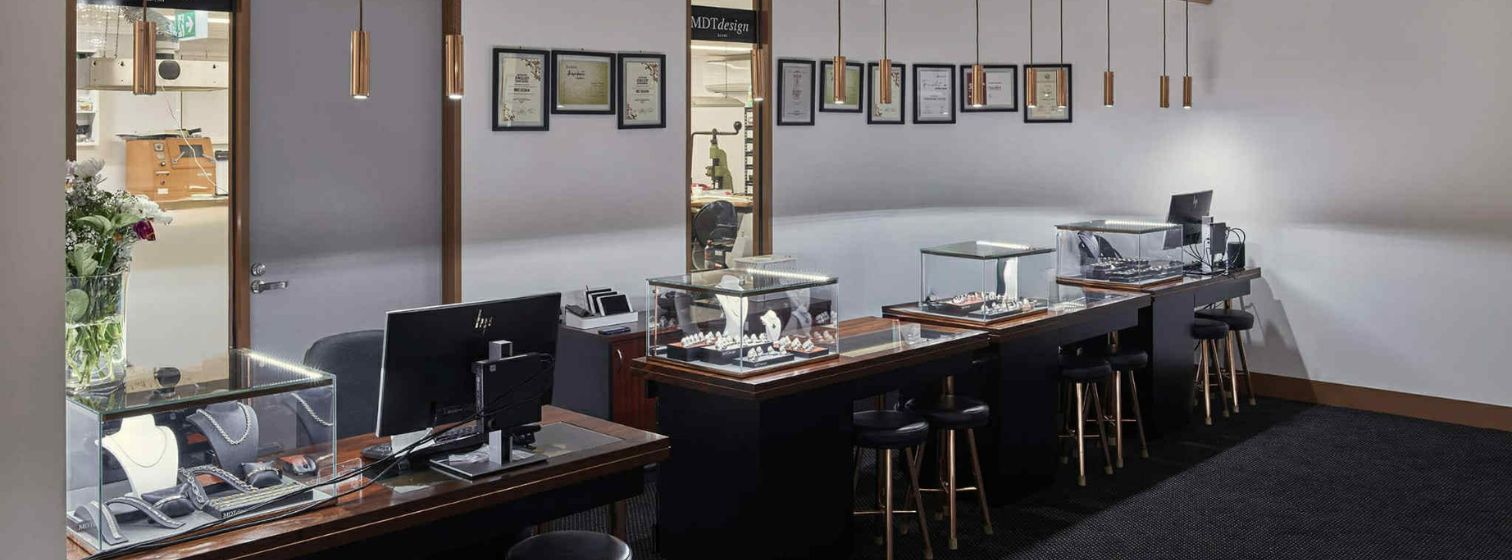
At MDT DESIGN in Melbourne, where jewellery is entirely handmade from solid precious metal in our onsite workshop, we study all jewellery pieces closely. Historical jewellery in particular reminds us that truly exceptional jewellery has always been defined by craftsmanship, structural integrity and thoughtful design rather than fleeting trends.
The Rockefeller Legacy: Jewellery as Cultural History
When the Rockefeller family prepared segments of their art and jewellery collection for auction, David Rockefeller reflected on all of the objects that had surrounded his family for decades:
This sentiment captures something important about fine jewellery.
The greatest pieces are never merely possessions. They become objects of endurance, passed from one generation to another.
Peggy Rockefeller’s collection included exceptional pieces by Van Cleef & Arpels, celebrated for their colour, precision and technical mastery. These jewels reflected not only the wealth of their owners but also the broader aesthetic values of mid-century high society.
Simultaneously, women such as Happy Rockefeller and Barbara Sinatra were assembling collections that fused European craftsmanship with distinctly American glamour.
Together, these collectors helped shape the visual language of luxury during one of the most transformative periods in jewellery design.
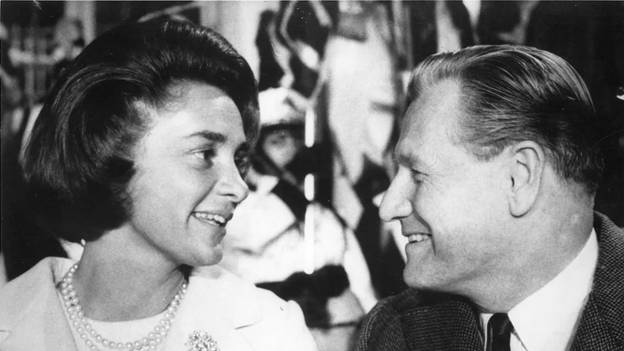
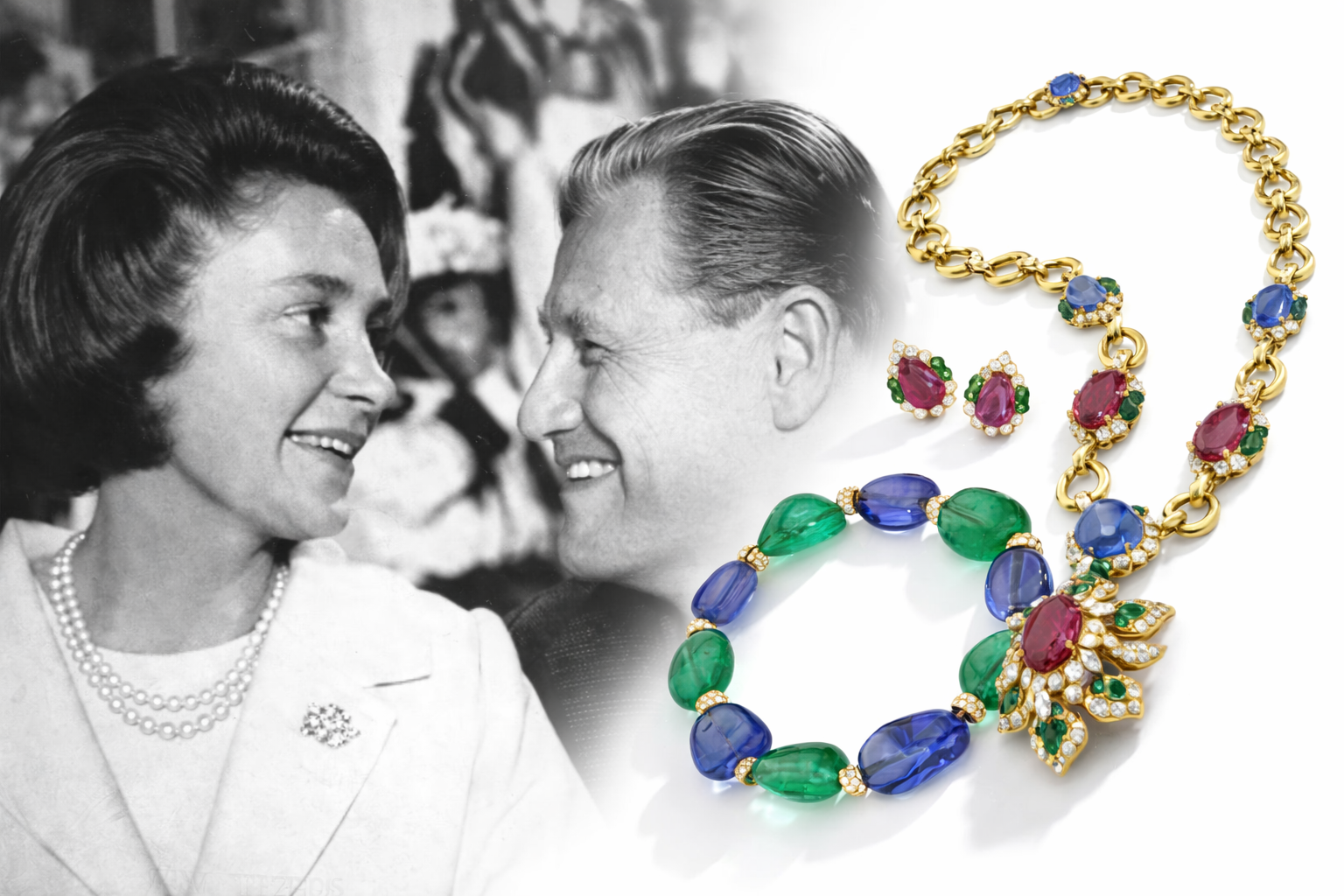
Happy and Nelson Rockefella
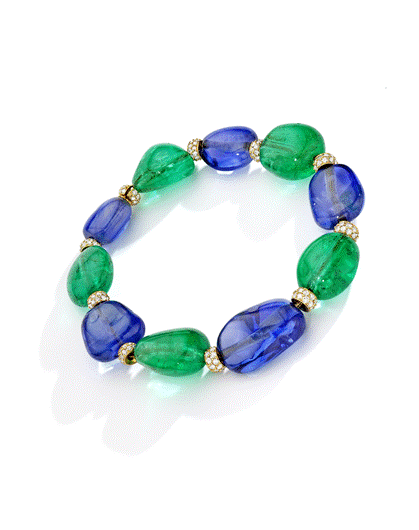
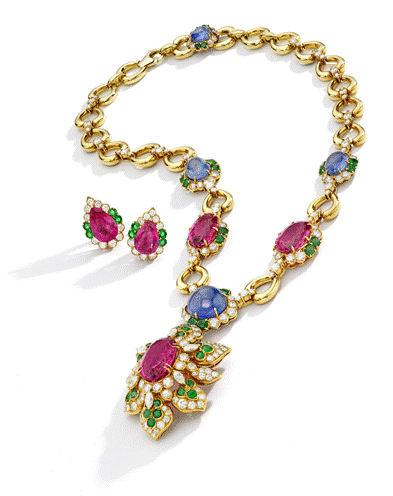
Sapphire and Emerald Bracelet, Van Cleef & Arpels from the Collection of Nelson & Happy Rockefeller
Post-War Jewellery Design and the Rise of American Luxury
The decades following the Second World War was a transformative period for jewellery design.
Europe predominantly dominated high jewellery craftsmanship with their jewellery houses. Yet by the 1950s and 1960s, the centre of luxury consumption was progressively shifting toward U.S.A.
New York became a powerful heart of jewellery culture.
Houses such as Harry Winston, often called the “King of Diamonds”, played a pivotal role. Winston’s influence extended beyond the jewellery salon into Hollywood, where his diamonds appeared on film stars and red carpets.
Hollywood glamour and New York society began to shape jewellery trends globally.
Collectors from the U.S embraced bold, expressive pieces – jewellery designed to be worn, seen and revered.
This change encouraged jewellers to explore:
- vibrant coloured gemstones
- dramatic diamond compositions
- sculptural gold shapes
- innovations in gemstone setting technique
The result was a period of extraordinary creativity that still influences jewellery design today.
Van Cleef & Arpels and the Technical Mastery of Mid-Century Jewellery
Among the most respected jewellers of the era was Van Cleef & Arpels, whose work appears often in collections owned by figures such as Happy Rockefeller.
What distinguished the jewellery house was not simply aesthetic refinement but also technical innovation.
One of their most celebrated achievements was the ‘Mystery Set‘, patented in 1933.
The Reality of Mystery Setting for Everyday Jewellery
While the Mystery Set is one of the most technically impressive gemstone-setting techniques created, it is also an extremely delicate style of jewellery.
Often referred to today as invisible setting, gemstones are precisely grooved and slid onto a hidden internal structure so that almost no metal is visible. The result is a continuous flow of colour along the piece’s surface, but it also means that it is lacking the structural support required to hold each individual stone in place.
For elite collectors such as Happy Rockefeller, this was rarely a concern. Pieces like these were typically worn occasionally at formal events rather than every day, and maintenance or repairs were simply part of owning high jewellery.
However, from a practical jeweller’s perspective, invisible settings are not ideal for jewellery intended for daily wear.
At MDT DESIGN, where every piece is entirely handmade from solid precious metal and built to last generations, durability is one of the first things we consider. If a stone becomes loose or is lost in a mystery-set design, repairs can be very complicated and often require specialised reconstruction of the setting.
For collectors with extensive jewellery collections, this level of maintenance may be acceptable. But for most people looking for jewellery they can wear every day for decades, settings that provide stronger structural support are far more practical.
Mystery-set jewellery remains a remarkable example of mid-century craftsmanship. Yet when designing heirloom jewellery intended for daily life, durability and long-term security must always come first.
Van Cleef & Arpels’ reputation also rested on subtler qualities:
- extraordinary gemstone calibration
- precise colour matching
- fluid articulation between components
- exceptional finishing and polish
These details gave their jewellery a sense of effortlessness- pieces that felt refined and wearable despite their complexity.
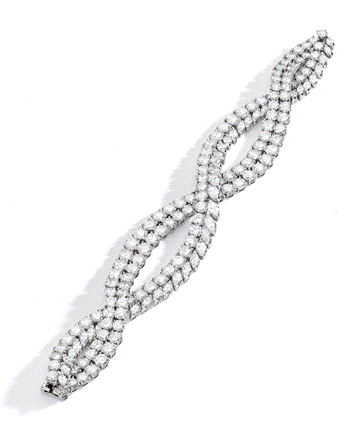
Diamond Bracelet Van Cleefs & Arpels from the Collection of Nelson & Happy Rockefeller
The Design Language of the 1960s: Bold Colour and Sculptural Gold
Jewellery design had entered a bold and expressive phase by the 1960s.
Designers veered away from diamond-dominated pieces and began embracing colour and contrast.
Jewellery from this era often featured:
- emeralds
- sapphires
- rubies
- tourmalines
Set against contrasting precious metals such as yellow gold or bright platinum, the use of these gemstones created dramatic visual arrangements.
Textured gold surfaces also became popular, allowing jewellery to feel more contemporary.
Designs from this era reflected the optimism present in this decade.
Post-war wealth, growing cultural influence, and the visibility of American luxury- all created a climate where jewellery became more expressive, more colourful and more personal.
A lot of jewellery created during this period feels strikingly modern, even by today’s standards.
What Gemmologists Look for in Historic Jewellery
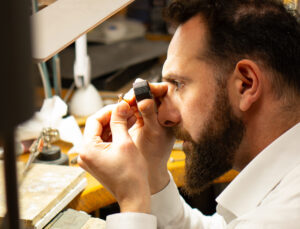
When experts examine jewels from historic collections such as Happy Rockefeller’s, they deeply analyse two factors of each design: the gemstones and the craftsmanship.
From a gemmological perspective, several qualities are carefully evaluated.
For diamonds, specialists assess:
- precision of cut
- colour consistency
- clarity under 10× magnification
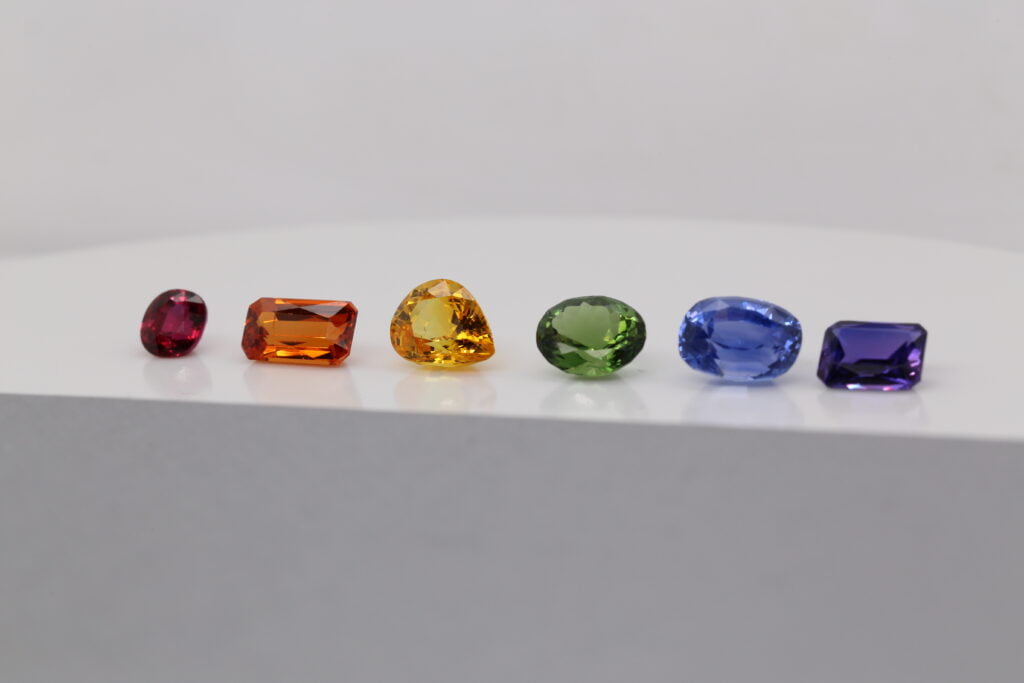
Coloured gemstones require a slightly different approach.
Experts consider:
- colour saturation
- evenness of tone
- transparency
- possible geographic origin
However, the gemstones alone tell only part of the story.
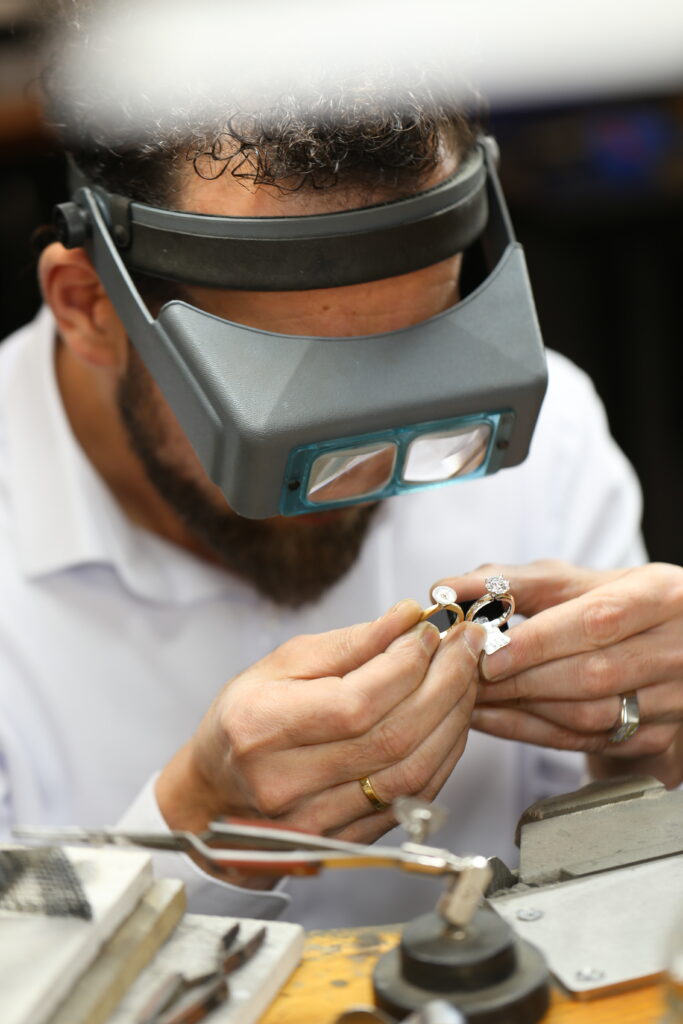
Equally important is the condition of the craftsmanship.
Jewellers examine:
- wear on claws or settings
- alignment and symmetry of stone placement
- structural integrity of the piece
- quality of finishing and polish
These details help to determine value and historical significance.
Happy Rockefeller’s Personal Jewellery Taste
Happy Rockefeller’s collection reveals a noteworthy design sensibility.
Rather than focusing merely on colossal gemstones or dramatic showpieces, she appeared to favour jewellery that balanced technical refinement with elegant proportion.
Many pieces in her collection demonstrate:
- carefully matched gemstones
- clean, architectural lines
- thoughtful colour composition
In other words, her taste reflected an appreciation for craftsmanship and design beyond pure spectacle.
For jewellers, this distinction matters.
Exceptional jewellery is rarely defined by size alone. Instead, it is the balance between design, gemstone selection and craftsmanship that gives a piece lasting significance.
Why Vintage Jewellery Still Captivates Collectors Today
Collectors continue to be drawn to vintage jewellery for many reasons.
Firstly, many historic pieces symbolise levels of craftsmanship that are increasingly rare today. For much of the 20th century, fine jewellery was predominantly handmade, with skilled jewellers forging and assembling pieces from solid precious metal rather than relying on casting. In contrast, modern jewellery production is largely driven by mass manufacturing – even within the luxury market – where consumers are often paying for the reputation of the brand as much as the quality of the piece itself.
For jewellers who continue to work in this traditional way – fabricating jewellery by hand from solid precious metal rather than casting it – historic pieces like these serve as an important reminder that the true foundation of fine jewellery has always been the skill of the maker. At MDT DESIGN in Melbourne, where every piece is entirely handmade in our onsite workshop, this philosophy remains central to how we approach jewellery today.
Secondly, these jewels capture specific moments in design history – the bold optimism of the 1960s, the elegance of mid-century modernism, the glamour of Hollywood.
Finally, vintage jewellery carries a sense of narrative.
Every piece has lived a life.
It may have appeared at state dinners, charity galas, film premieres or private celebrations.
That sense of continuity is part of what makes vintage jewellery so compelling.
What Historic Jewellery Teaches Contemporary Jewellers
For modern jewellers, historic pieces are more than simply beautiful artefacts.
They offer numerous lessons in craftsmanship.
At MDT DESIGN in Melbourne, our jewellery is entirely handmade in our onsite workshop. Unlike mass-produced jewellery that relies on casting, our pieces are forged, hardened and built with long-term durability in mind.
Studying historic jewellery collections fortifies the same theory we apply in our own work:
the finest jewellery is always defined by craftsmanship.
The great jewellers of the 20th century understood this deeply.
Their pieces were not designed simply to be fashionable for a season.
They were made with intention, to endure and to tell a story.
And decades later, they still do.
If you own a meaningful piece of vintage jewellery and would like it assessed, valued or carefully modified, our jewellers would be happy to help. At MDT DESIGN Melbourne, we regularly work with heirloom pieces, advising clients on restoration, redesign and long-term care.
Contact us to arrange a consultation and visit our boutique to speak with an expert jewellery designer.