Diamond Colour Guide: Understanding the Difference Between D and Z
Among the 4 c’s of Diamonds, one of the most discussed but most misunderstood factors is the colour grading.
Grading scales suggest clear differences between each letter colour grade, the reality is that the differences between them are very nuanced and often hard to tell apart.
At MDT DESIGN, we strive to educate our clients on all areas of the 4 C’s, as making an informed decision is of utmost importance for such a sentimental and significant purchase. Understanding colour is understanding the bigger picture. We often need to consider how the stone will look once set, how it will be worn and how it will wear overtime.

What Is Diamond Colour ?
When referring to Diamond Colour Grading, we are referring to the presence of (often subtle) yellow or brown tones within a diamond within colourless (or white) diamonds.
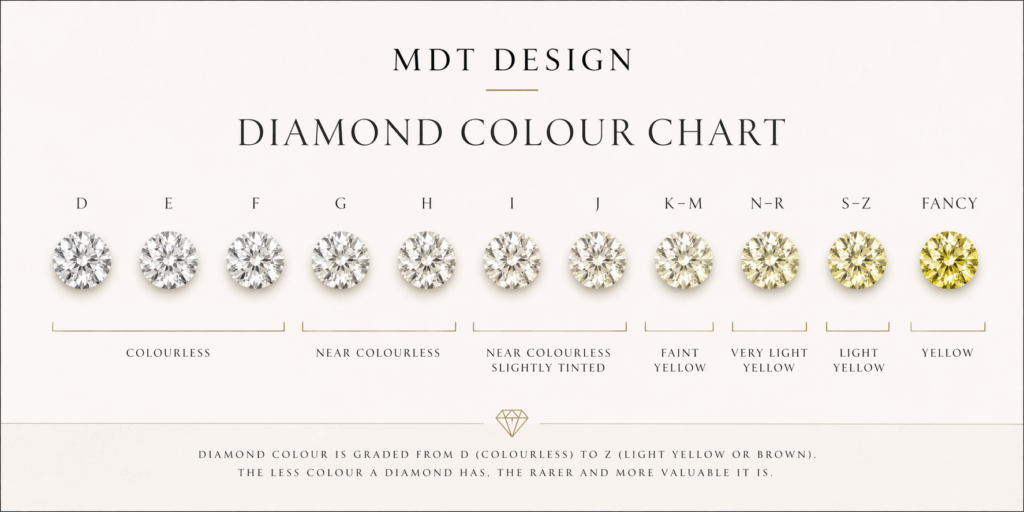
The GIA’s industry standard grading scale ranges from D (completely colourless) to Z (visible colour)
The closer a diamond is to D colour, the less colour it contains- and the more rare it is considered.
The Diamond Colour Scale Explained
Considering each letter individually can often be confusing, it can be easier to consider these gradings in the following groups:
D to F: Colourless Diamonds
The highest gradings of colour: diamonds that fall within this group contain no detectable colour, even in professional grading environments.
- Bright and highly reflective
- Considered the highest colour grades
- Extremely subtle differences between D, E and F
→ Explore:
- D Colour Diamonds
- E Colour Diamonds
- F Colour Diamonds
G to J: Near Colourless Diamonds
This grading category houses the nearly colourless diamonds. They often show slight warmth under certain lighting conditions, but once set can appear whiter than when loose.
- Balance of appearance and value
- Accesable choice for engagement rings
- Stronger in brilliant cut diamonds
→ Explore:
- G Colour Diamonds
K to M: Faint Colour
When considering this colour grading cluster it is important to understand that the tint becomes more visible, particularly in larger stones.
- Can appear warmer or slightly creamy
- Often used intentionally in vintage-inspired designs
N to Z: Noticeable Colour
Diamonds that fall within this category are considered less rare as they display visible colour and are less commonly used in traditional engagement rings.
- May show yellow or brown tones
- More niche or stylistic use
How Noticeable is Diamond Colour?
The colour grade of a diamond and the way it appears functionally in day to day life.
This is where most people misunderstand the scale.
Amoung real life conditions:
- D vs E → indistinguishable
- E vs F → nearly impossible to detect
- F vs G → slight warmth may begin
Factors that influence visible perception:
- Lighting
- Size of Diamond
- Cut Grade
- Style of Setting
- Colour of the metal
This is why colour should be selected whilst zooming out and viewing the design as a whole.
How Setting and Metal Affect Colour
A diamond set into a piece of jewellery often has a different colour perception than a loose diamond.
- Yellow gold can hide warmth
- White gold and platinum can enhance brilliance
- Particular settings allow more light into stone
The way you treat lower colour grade diamonds can enhance them and the way to treat a high colour grade can diminish its colour.
→ Explore how this works in our Engagement Ring Settings Guide
Is Higher Diamond Colour Always Better?
Higher colour grades are rarer- but that doesn’t always translate to a better overall engagement ring.
In many cases:
- Moving from D to F or G creates little visual difference
- But allows for improvements in size, cut, or design
At MDT DESIGN, we educate our clients, equipping them with the knowledge required to make the most informed decision, we guide them toward the most balanced outcome, that considers their lifestyle and budget not simply the highest specification.
What About Coloured Diamonds?
Diamond colour and Coloured diamonds, sound very similarly -however both terms refer to two very different things.
In typical diamond grading, the colour describes the absence of colour whereas- coloured diamonds, on the other hand, are naturally occurring stones that display distinct hues – such as:
Coloured diamonds are not graded using the traditional colour scale that colourless diamonds are graded with. They are assessed based on:
- Hue (the actual colour)
- Saturation (intensity of the colour)
- Tone (lightness or darkness)
Coloured diamonds are also significantly more rare than traditional white diamonds, often selected for their individual characteristic rather than conventional grading standards.
When referring to design, coloured diamonds often become a vibrant defining feature of the jewel.
MDT DESIGN Diamond Standards
At MDT DESIGN, we take a considered approach to diamond selection, focusing not only on grading, but on how a stone will actually appear once worn.
As part of this, we do not offer diamonds below a G colour grade.
While lower colour grades can still be suitable in certain contexts, our standard is to ensure every diamond we work with presents as bright, clean, and visually colourless to the eye. This allows for a consistent level of quality across all of our pieces, regardless of design or setting.
In practice, this means:
- No visible warmth in everyday lighting
- Strong visual brightness once set
- A refined, balanced appearance across all designs
Rather than overwhelming clients with excessive options, we curate our diamond selection to reflect what we believe performs best in real life- ensuring every ring meets the same level of clarity, integrity, and aesthetic standard.
MDT DESIGN Approach to Diamonds
Because every ring is custom designed and handmade in our Melbourne workshop, we consider how all elements work together:
- Diamond proportions
- Setting structure
- Metal choice
- Lifestyle and wear
Rather than selecting a diamond in isolation, we build the entire piece around it-ensuring the final result feels cohesive, intentional, and enduring.